





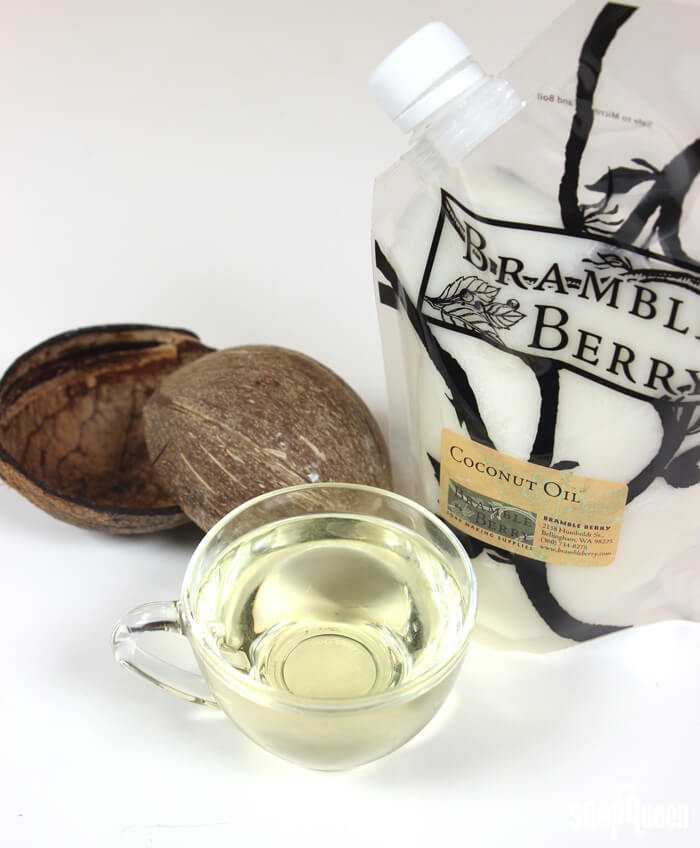
 Coconut oil is one of the most popular oils in soapmaking. It offers a unique combination of cleansing, firming and skin-loving properties to recipes. In addition, coconut oil is wonderful in a variety of other bath and beauty projects such as scrubs, lip balm, hair care and more. It has become particularly popular in the past few years, as many use coconut oil as a skin and hair moisturizer.
Coconut oil is harvested from the seeds of the coconut tree (cocos nucifera) and is primarily cultivated from Southeast Asia and the Philippines. Coconut oil is solid at room temperature and melts to a clear liquid oil at 76 ° F. It’s made up of various fatty acids, including saturated and non-saturated. In particular, coconut oil contains a large amount of lauric and myristic saturated acids. The unique fatty acid composition of coconut oil gives it fantastic cleansing properties.
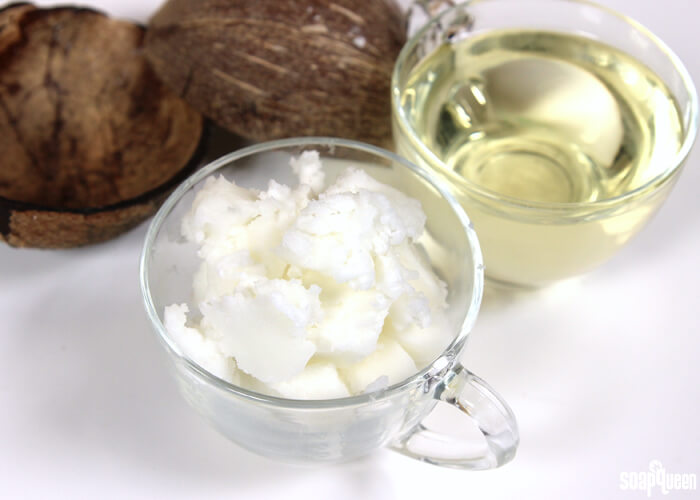 Coconut oil is solid at room temperature and liquid above 76 ° F.
Coconut oil can be altered to create different “versions” of the oil. You may have also seen 92 ° F coconut oil on various lye calculators. The 92 ° F coconut oil has been hydrogenated to create a coconut oil with a higher melt point. This means that unsaturated fatty acids in the oil are converted to saturated acids, which increases the melting point. The oil sold at Bramble Berry is 76 ° F. If you’re unsure what kind of coconut oil you have, it’s usually safe to assume the oil is non-hyrogenated, 76 ° F coconut oil. This is the most common type of coconut oil found in stores and online.
Fractionated coconut oil is created by separating fatty acids from the whole oil. Specifically, the long chain triglycerides are removed, leaving behind the short and medium chain fatty acids. Fractionated coconut oil is a stable product with an an almost indefinite shelf life. It’s incredibly lightweight and does not leave a greasy feeling on the skin, making it a great option for massage oil and lotions. Fractionated coconut oil is clear and liquid at room temperature. It works great as a carrier oil for fragrances, or in products such as scrubs, bath bombs and lip products. Check out the Honey Kisses Lipstick Tutorial for a fantastic lip recipe using fractionated coconut oil.
Note: The Caprylic Capric Triglycerides-fractionated coconut oil found at Bramble Berry is specifically the short chain fatty acids, known as caprylic capric triglycerides. It’s slightly different from fractionated coconut oil, as it only contains the short chain fatty acids. It can, however, be used in place of fractionated coconut oil, with a slightly lighter, silkier feel.
In the Moisturizing Heel Butter, fractionated coconut oil is added to give the balm a smoother and softer texture. Because fractionated coconut oil absorbs so easily into the skin, it’s used with argan and sweet almond oil in the Baby Massage Oil tutorial. Fractionated coconut oil is also added to the Givember Massage Oil for a lightweight texture.
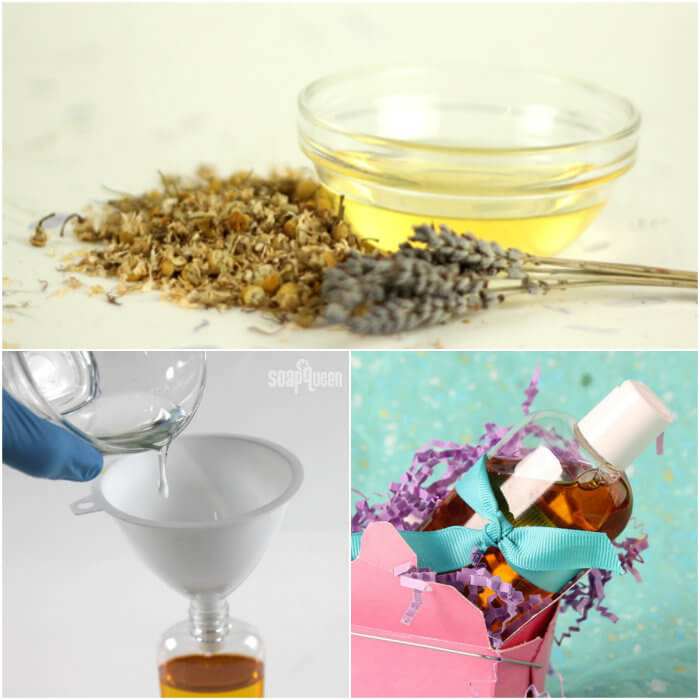 Top: Baby Massage Oil
Bottom: Givember Massage Oil
In cold process soap, coconut oil is generally used around 20-30% of the recipe. Coconut oil is a super cleansing addition that produces big, copious bubbles. It is so good at its job that it can strip skin of moisture. That leaves the skin dry and even irritated. A usage rate of 30% is ideal for the perfect balance of cleansing without drying. For more sensitive skin, keep the coconut oil at 15% or less in your bar. That being said, soaping rules are made to be broken! In this recipe from Modern Soapmaking, Kenna shows you how to create a bar with 100% coconut oil. To make sure the bar is not drying, Kenna uses a 20% superfat and aloe vera liquid.
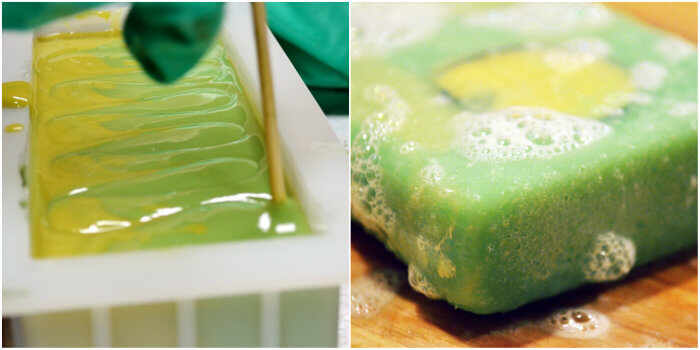 This soap made by Kenna of Modern Soapmaking uses 100% coconut oil and aloe vera liquid to create a cleansing and moisturizing bar.
If you’re looking for more cold process soap recipes using coconut oil, good news! Just about all my cold process recipes use coconut oil. =) In my opinion, coconut oil is the trickiest to substitute because it gives the soap firming, lathering and cleansing properties. If you are looking to formulate a recipe without coconut oil, palm kernel flakes can help. I recommend using 15% or less of palm kernel flakes in your cold process recipe.
If you’d like to use coconut oil in more bath and beauty products, the Coconut Oil & Pink Salt Scrub uses both 76 ° F coconut oil and fractionated coconut oil. The combination of the oils creates a texture that is creamy and spreadable at room temperature. It’s scented with Lime Fragrance Oil and Island Coconut Fragrance Oil for a bright, citrus scent. Check out the Soap Queen TV video below to learn how to make it!
What is your favorite way to use coconut oil? It’s such a versatile product! I love it in scrubs, but of course I couldn’t do without it for cold process soaps. =)
