





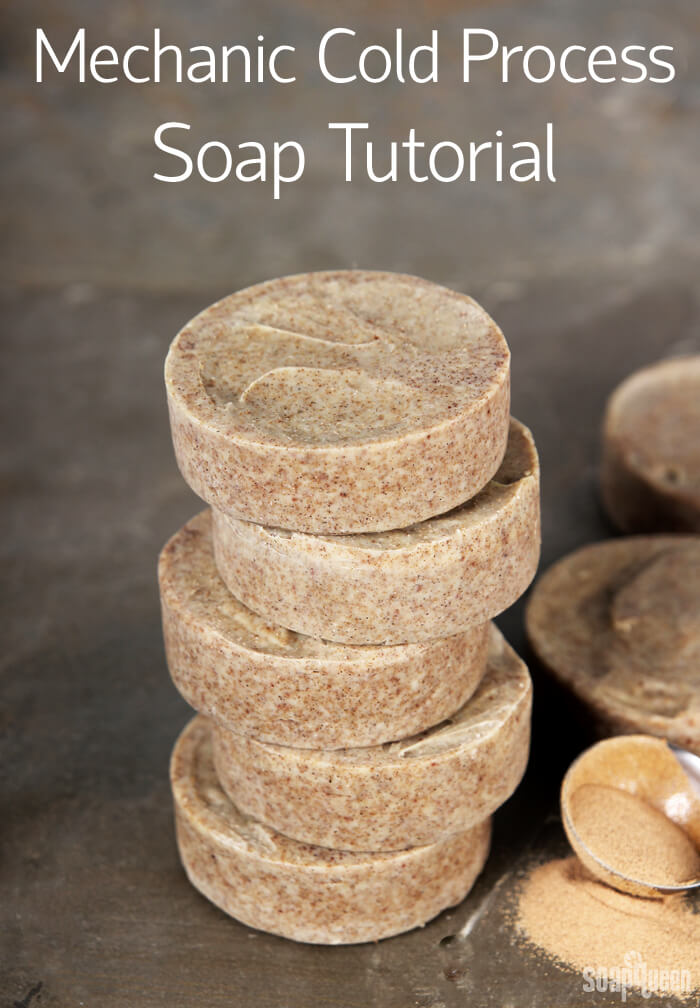
“Mechanic soap” usually refers to extra scrubby bars. The exfoliants help remove grease and oil from working hands. For these bars, I added 5 tablespoons of pumice and 8 tablespoons of walnut shells for plenty of exfoliation. Both pumice and walnut shells are effective yet fine grained, so they are not overly scratchy. These bars are be suitable for the body, but I wouldn’t recommend them for gentle facial skin. They are great for rough spots like elbows, knees and heels.
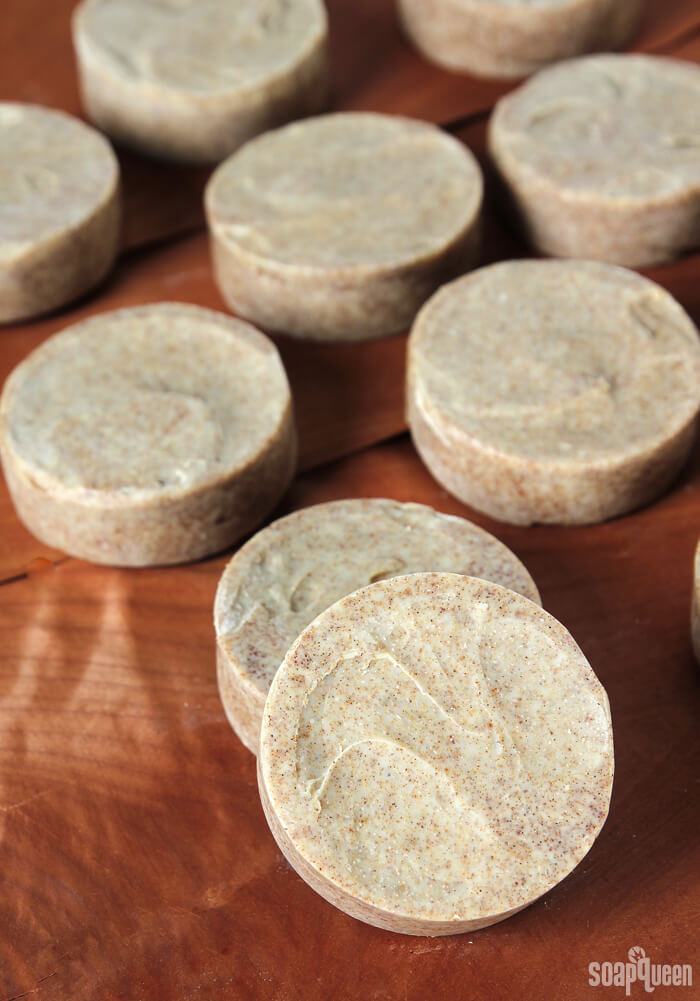
I kept these bars no-fuss with no colorants or fancy design. Sometimes, simple is best. The walnut shells give a natural warm hue. When the orange 10X essential oil is added, it turns the batter a rich orange, but I found it faded as the soap hardened. The pumice does not affect the color greatly, but it does cause the soap batter to accelerate. Prior to adding the pumice at trace, I recommend dispersing it in oil to help get rid of clumps.
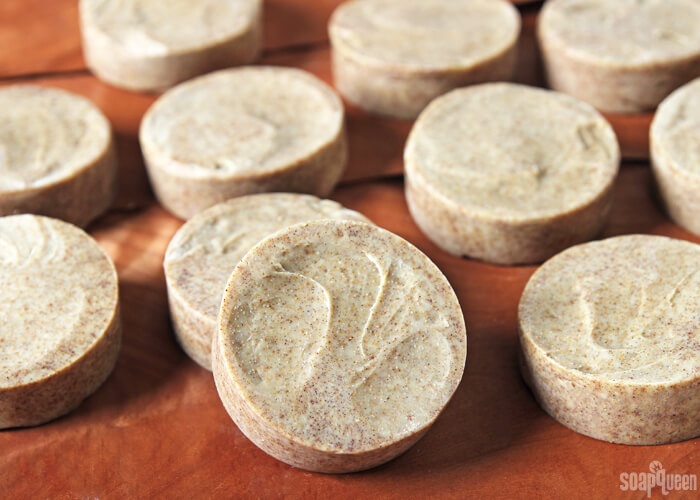
I used my melted and mixed soaping oils to disperse the pumice, rather than adding extra oil to the recipe. This is a personal preference. Normally, I use extra lightweight oil to disperse my colorants and consider the dispersion oils a little extra superfat. For this recipe I did not want to add 5 whole tablespoons of extra oil because I wanted these bars to be nice and cleansing (and remember, any extra oils = weigh down lather and make rinse-off not as easy and fast). This recipe is already formulated with a 5% superfat, and contains a 12% water discount to help these bars cure faster. Read more about water discounting soap here.
What You’ll Need:
12 Bar Round Silicone Mold
9.6 oz. Coconut Oil (30%)
9.6 oz. Olive Oil (30%)
9.6 oz. Palm Oil (30%)
1.6 oz. Castor Oil (5%)
1.6 oz. Cocoa Butter (5%)
9.4 oz. Distilled Water (12% water discount)
4.6 oz. Sodium Hydroxide Lye
1.7 oz. Orange 10X Essential Oil
5 Tbs. Pumice
8 Tbs. Walnut Shells

Click here to add everything you need for this project to your Bramble Berry shopping cart!
[sq_products]
If you’ve never made Cold Process soap before, stop here! I highly recommend checking out our FREE four part SoapQueen.tv series on Cold Process Soapmaking, especially the episode on lye safety. And if you’d rather do some reading, Bramble Berry carries a wide range of books on the topic, including my newest book, Pure Soapmaking. You can also checkout the digital downloads for that instant gratification factor.
SAFETY FIRST: Suit up for safe handling practices! That means goggles, gloves and long sleeves. Make sure kids, pets, and other distractions and tripping hazards are out of the house or don’t have access to your soaping space. Always soap in a well-ventilated area.
FRAGRANCE PREP: Measure 1.7 ounces of orange 10X essential oil into a glass, fragrance oil safe container. Set aside.
ONE: Slowly and carefully add the lye to the water and gently stir until the lye has fully dissolved and the liquid is clear. Set aside to cool.
TWO: Melt and combine the coconut oil, cocoa butter, castor oil, palm oil, and olive oil (remember to fully melt then mix your entire container of palm oil before portioning). Once the lye water and the oils have cooled to 130 degrees or below (and are ideally within 10 degrees of each other). Place 5 tablespoons of pumice in a small container, and add 5 tablespoons of the soaping oils into the container and mix together. Doing so helps get rid of clumps, without adding too much extra oil into the soap. Set aside.
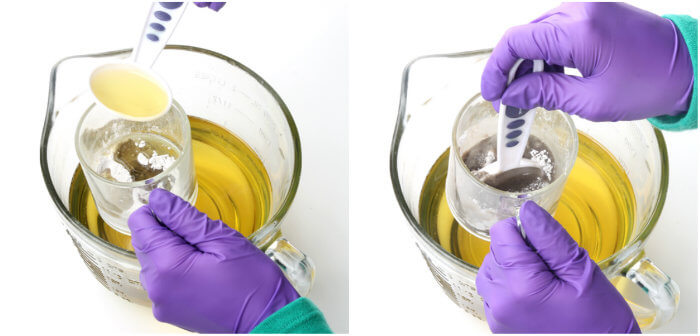
THREE: Add the lye water to the oils and stick blend until thin trace. If you’d like a harder bar of soap that releases faster from the mold, you can add sodium lactate to the cooled lye water. Use 1 teaspoon of sodium lactate per pound of oils in the recipe. For this recipe, you’d add about 2 teaspoon sodium lactate.
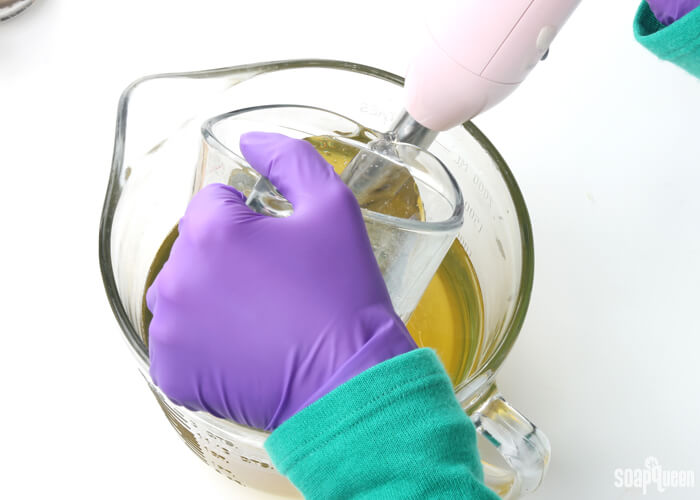
FOUR: Once you’ve reached a thin trace, add the orange 10X essential oil and use the stick blender to mix in. Alternate using short bursts and stirring with the blender to avoid over stick blending.
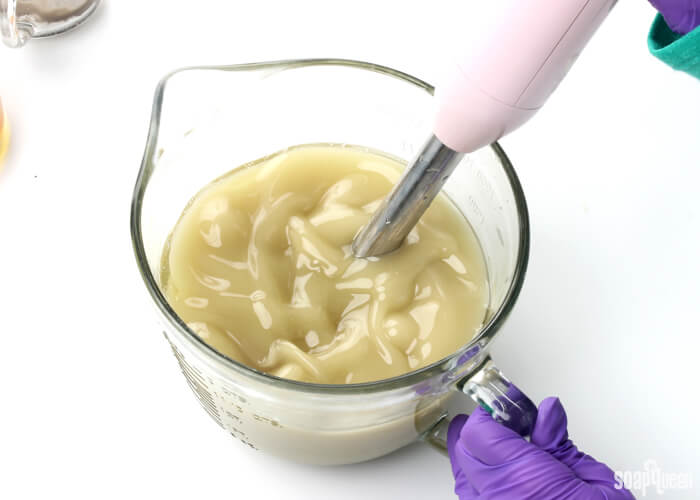
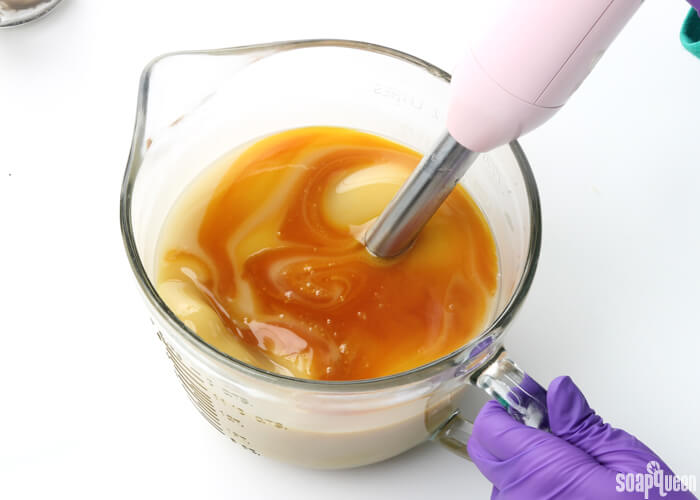
FIVE: Add the pumice mixture into the soap, and use the stick blender to mix in. This will cause the mixture to thicken.
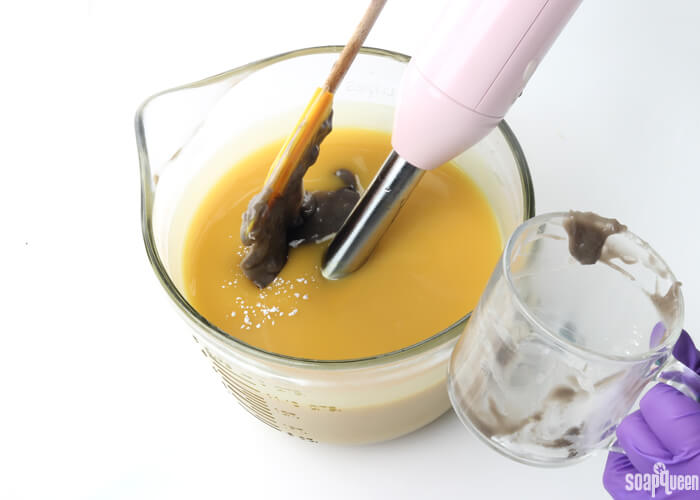
SIX: Add 8 tablespoons of walnut shells and use a whisk to fully mix in.
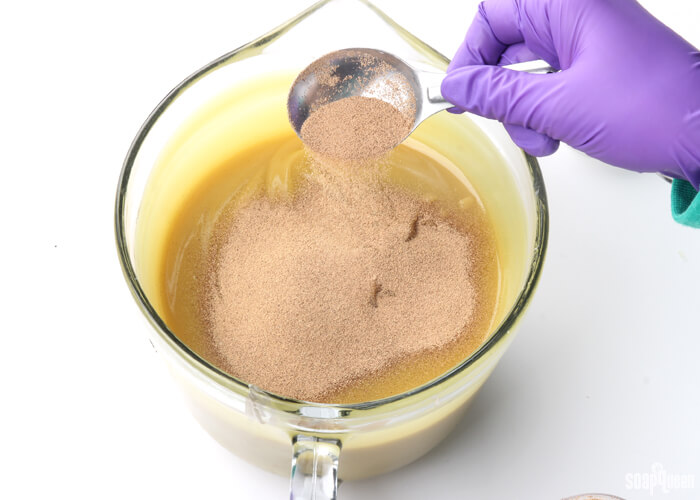
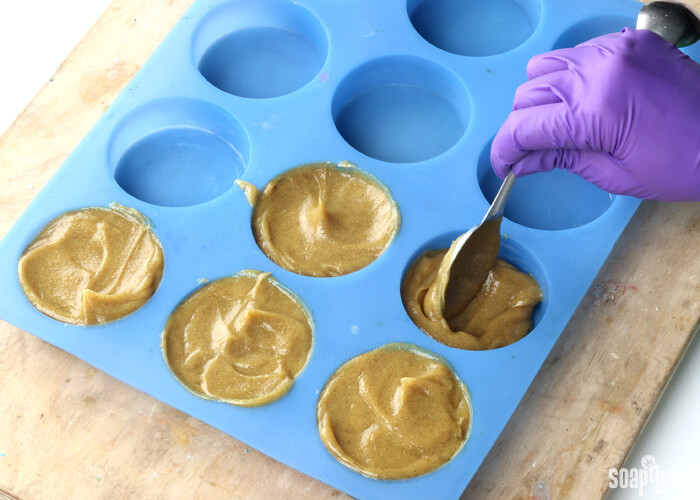
SEVEN: If your batter is thin enough to pour, fill each cavity evenly. My batter was quite thick thanks to the additives and water discount, so I used a spoon to fill each cavity. Tap the mold firmly on the counter to help eliminate the air bubbles (make sure those goggles are on; beware of splashing soap when tapping). Spritz the soap with 99% isopropyl alcohol to help eliminate soda ash.
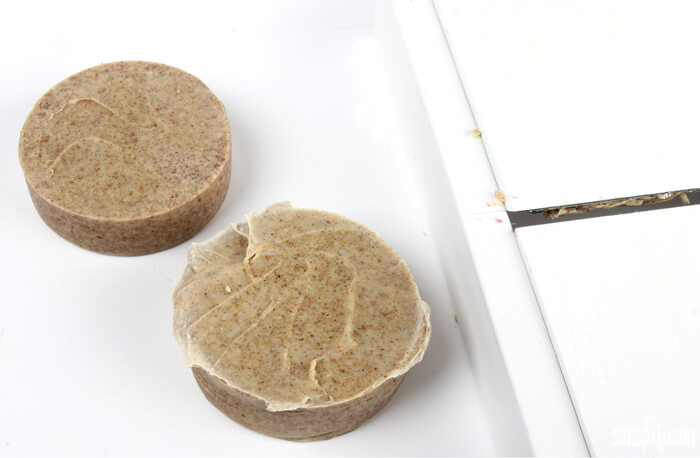
Allow the soap to stay in the mold for about 2-3 days. Unmold, and allow to cure for 4-6 weeks. I used the Soap Shaver to clean up the sides and top of the soaps, but this is optional.
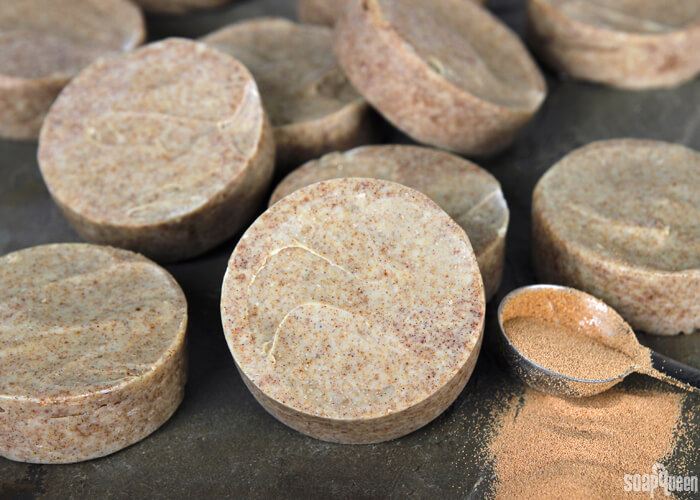
Have you ever made super scrubby bars before? What kind of exfoliant did you use? Any ingredients you LOVE for mechanic’s hands?
[expand title=”Click to View the Recipe”]

Mechanic Cold Process Soap Tutorial
Ingredients
- 12 Bar Round Silicone Mold
- 9.6 oz. Coconut Oil
- 9.6 oz. Olive Oil
- 9.6 oz. Palm Oil
- 1.6 oz. Castor Oil
- 1.6 oz. Cocoa Butter
- 9.4 oz. Distilled Water
- 4.6 oz. Sodium Hydroxide Lye
- 1.7 oz. Orange 10X Essential Oil
- 5 Tbs. Pumice
- 8 Tbs. Walnut Shells
Instructions
SAFETY FIRST: Suit up for safe handling practices! That means goggles, gloves and long sleeves. Make sure kids, pets, and other distractions and tripping hazards are out of the house or don’t have access to your soaping space. Always soap in a well-ventilated area.
FRAGRANCE PREP: Measure 1.7 ounces of orange 10X essential oil into a glass, fragrance oil safe container.
- Slowly and carefully add the lye to the water and gently stir until the lye has fully dissolved and the liquid is clear. Set aside to cool.
- Melt and combine the coconut oil, castor oil, cocoa butter, palm oil, and olive oil (remember to fully melt then mix your entire container of palm oil before portioning). Once the lye water and the oils have cooled to 130 degrees or below (and are ideally within 10 degrees of each other). Place 5 tablespoons of pumice in a small container, and add 5 tablespoons of the soaping oils into the container and mix together. Doing so helps get rid of clumps, without adding too much extra oil into the soap. Set aside.
- Add the lye water to the oils and stick blend until thin trace. If you’d like a harder bar of soap that releases faster from the mold, you can add sodium lactate to the cooled lye water. Use 1 teaspoon of sodium lactate per pound of oils in the recipe. For this recipe, you’d add about 2 teaspoon sodium lactate.
- Once you’ve reached a thin trace, add the orange 10X essential oil and use the stick blender to mix in. Alternate using short bursts and stirring with the blender to avoid over stick blending.
- Add the pumice mixture into the soap, and use the stick blender to mix in. This will cause the mixture to thicken.
- Add 8 tablespoons of walnut shells and use a whisk to fully mix in.
- If your batter is thin enough to pour, fill each cavity evenly. I found mine was quite thick, so I used a spoon to fill each cavity. Tap the mold firmly on the counter to help eliminate the air bubbles. Spritz the soap with 99% isopropyl alcohol to help eliminate soda ash.
- Allow the soap to stay in the mold for about 2-3 days. Unmold, and allow to cure for 4-6 weeks. I used the Soap Shaver to smooth out the textured top of the soaps, but this is optional.
[/expand]
