





• January 13, 2017

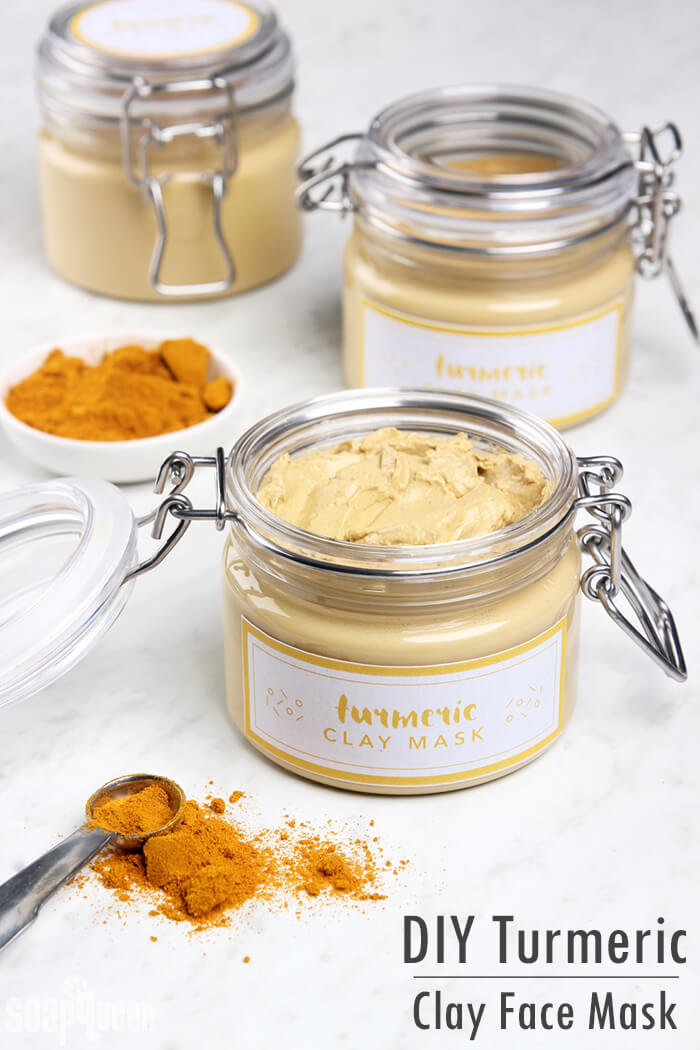
DIY Turmeric Clay Face Mask

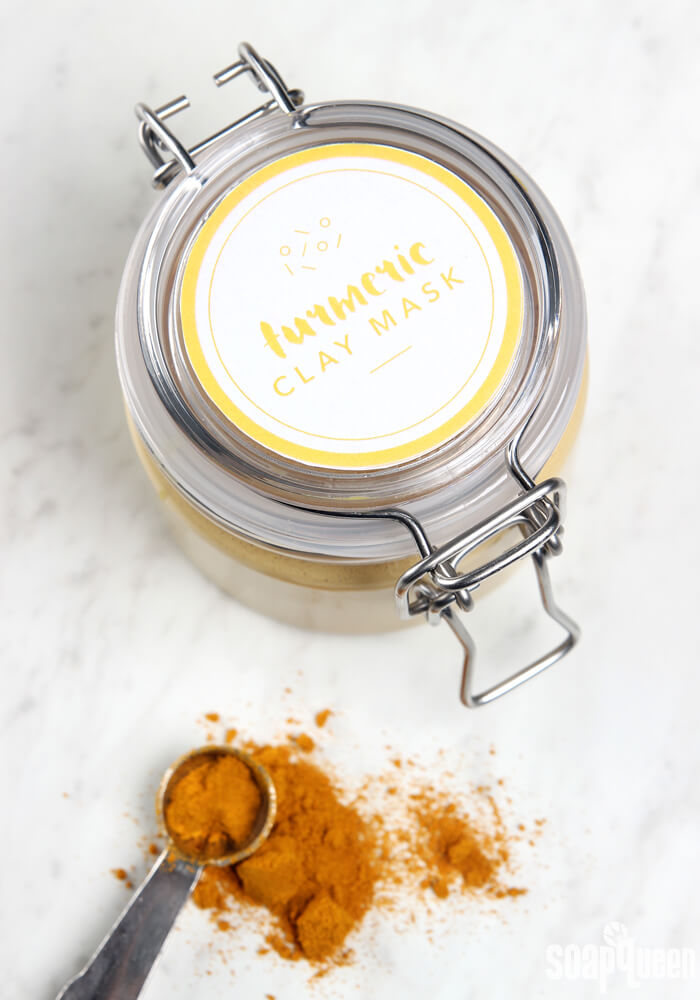
Turmeric is a plant of the ginger family, and is usually used in dry powder form. Its commonly added to dishes like curry and has been used in Chinese medicine for years. Turmeric contains curcumin, which is an anti-oxidant and is thought to have anti-inflammatory properties. This Turmeric Clay Face Mask recipe harnesses the properties of this powerful spice, along with luxurious ingredients like carrot seed essential oil and carrot extract. They’re a blast to make, and are a great way to get creative and give your skin a fresh start to the new year!
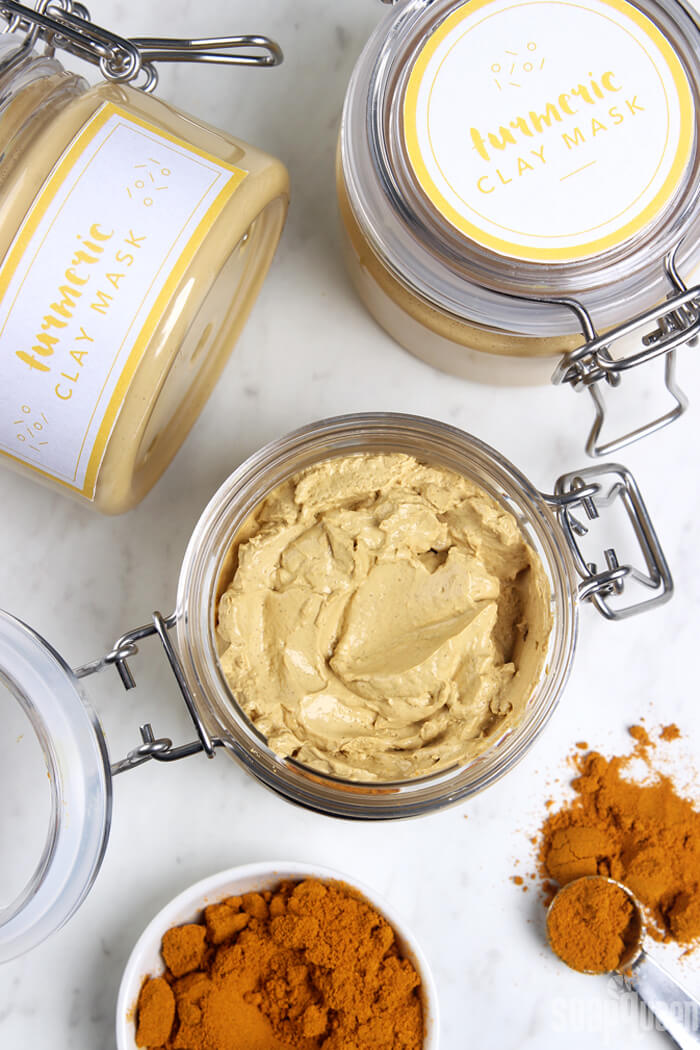
DIY Turmeric Clay Face Mask

This clay mask was specifically designed for normal to oily skin types. It contains kaolin clay, which is fine-grained and gentle on the skin. Carrot extract is high in vitamins A and E, and is thought to soothe the skin. Carrot seed essential oil is rich in vitamins and carotene. It has a distinct herby smell that’s not everybody’s favorite, but this recipe uses a small amount so it’s not overwhelming.

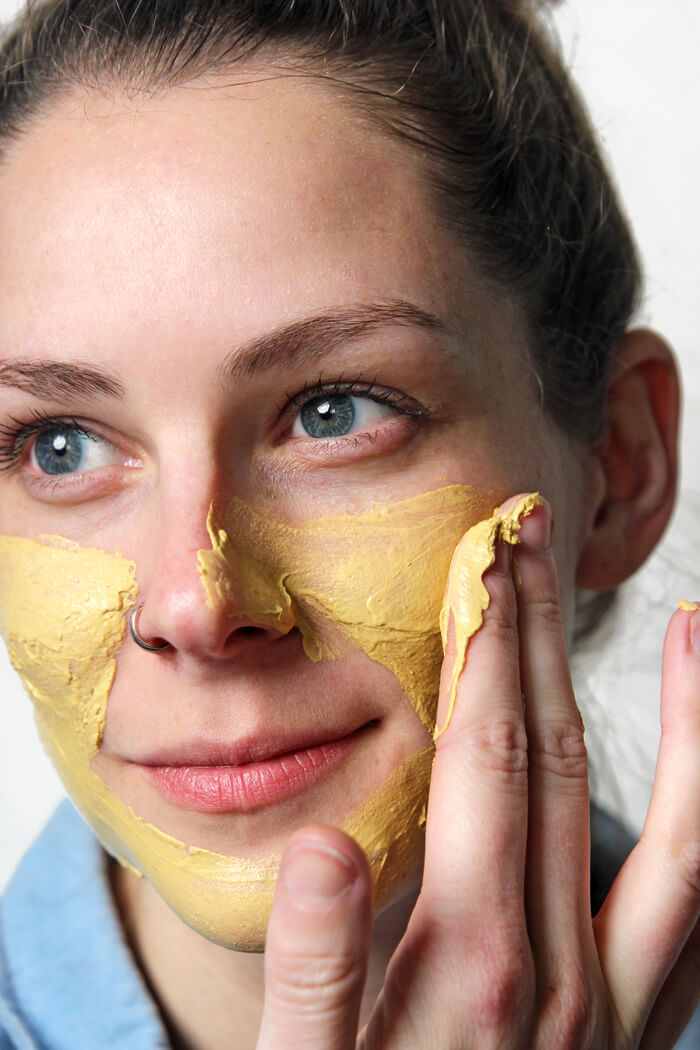
I was a bit worried this mask would leave my skin yellow. Luckily, it washes of clean with no staining. On a personal note, I have a bit of redness to my skin and I felt this mask really made a difference. It could be the yellow color of the turmeric neutralizing that redness, but hey, I’ll take it! As always, if you’re selling this product, you cannot claim it cures redness or any skin condition.

Speaking of medical claims and skin care products, you’ll find plenty of claims online that turmeric treats various medical conditions. If you are selling a product that contains turmeric (like this mask!), be careful about making medical claims. If your product claims to treat the skin or body in anyway, your product is considered a drug and needs testing by the FDA. Learn more about cosmetics and medical claims here.
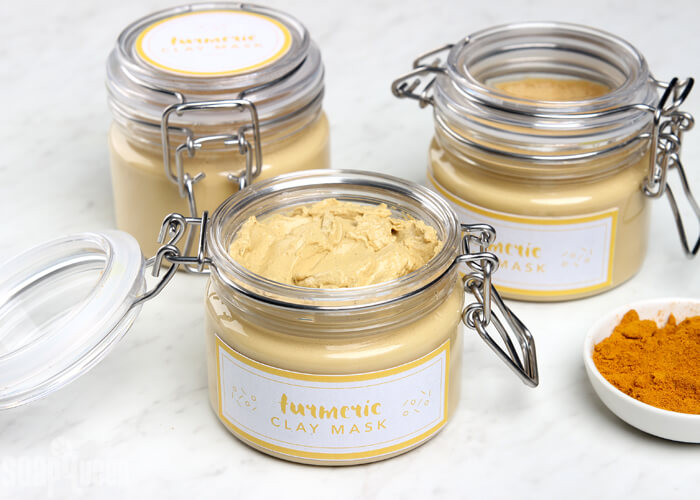
DIY Turmeric Clay Face Mask

A few notes about recipe substitutions and changes:

  • Polawax Emulsifying Wax is a highly reliable and strong emulsifier. It could be substituted for the generic version, Emulsifying Wax, if you prefer, although this recipe was not tested with Emulsifying Wax. Due to the clay in the recipe, we splurged and used Polawax Emulsifying Wax to avoid any chance of separation.
  • This recipe calls for avocado and meadowfoam oil. Other oils can be used instead if you prefer; we recommend staying with liquid oils that absorb easily into the skin. Changing the total amount of oil in the recipe will change the overall texture of the mask.
  • Because this recipe is essentially a lotion and contains a large amount of water, a preservative is necessary to avoid mold and bacterial growth. We chose Optiphen, but other water soluble preservatives will work. Learn more about preservatives here.
  • Increase the total amount of clay if you want it to be better suited for oily skin, or decrease the amount to make it better for dry skin. Decreasing the amount of clay may create a thinner product.
  • If you prefer to use different clays, feel free to swap them. Clays have different absorbing properties, which will affect how it feels on the skin. Learn which clay is right for your skin.
  • If you have very sensitive skin, fragrance and essential oils can be irritating. Omit from the recipe if you prefer.
  • Carrot extract can be substituted with a different extract if you prefer.
DIY Turmeric Clay Face Mask

What You’ll Need:
Four 8 oz. Bail Jars 
21.4 oz. Distilled Water
1 oz. Meadowfoam Oil
1.3 oz. Avocado Oil 
1 oz. Polawax Emulsifying Wax
0.8 oz. BTMS-50 Conditioning Emsulifier
6 oz. Kaolin Clay
0.2 oz. Turmeric Powder
2 mL Carrot Seed Essential Oil
0.5 oz. Carrot Extract

0.2 oz. Optiphen
*Note: Meadowfoam Oil has been discontinued. You can supplement the recipe with more avocado oil (use 2.3 ounces of avocado oil) or use another lightweight liquid oil, like green tea seed oil or chia seed oil. 


Click here to add everything you need for this project to your Bramble Berry shopping cart!
DIY Turmeric Clay Face Mask

EQUIPMENT PREP: Disinfect your utensils by dipping them in a 5% bleach water solution and allowing to dry. This includes mixing containers, your stick blender, and any spoons or spatulas that may come in contact with your mask. Your products must be as free of germs, bacteria, and microbes as possible. To be safe, bleach water all your utensils.

CLAY PREP: In a small separate container, measure 6 ounces of kaolin clay.

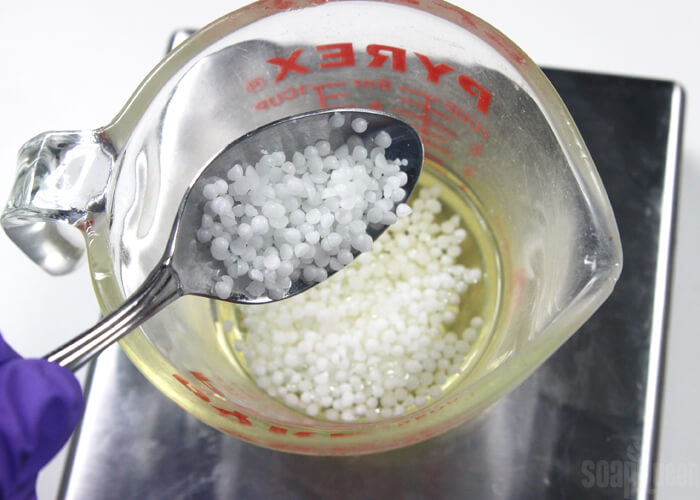
ONE: In a heat-safe container, combine the avocado oil, meadowfoam oil, BTMS-50 and Polawax. Heat the container in the microwave using 30-60 second bursts until the waxes have fully melted. Be careful when removing the container, as it will be quite hot. Set aside.
DIY Tumeric Clay Face Mask

TWO: In a separate large container, heat the distilled water in the microwave (or on the stove top) until it reaches about 160-170 ° F. Once the water reaches the correct temperature, some of it may evaporate. Remeasure and add more distilled water if necessary until you have 21.4 ounces of hot water.

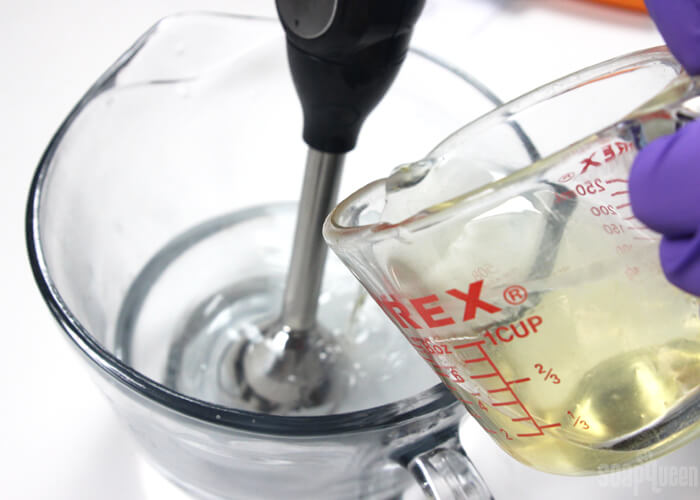
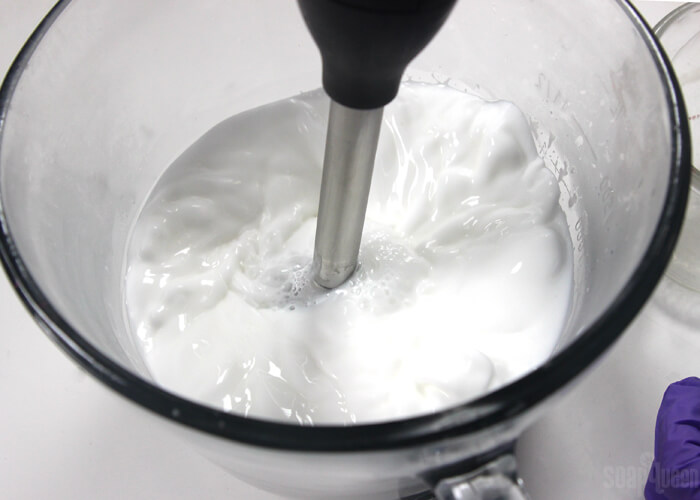
THREE: Check the temperatures of both containers. Each container should be about 160° F. If the oil and wax has cooled, place back into the microwave until fully melted. Place the stick blender into the water, and burp it to help get rid of bubbles. Pour the oil and wax mixture into the water and use a spatula to make sure every little bit is added. Begin pulsing the stick blender. The mixture will take on a “milky” appearance once the water, oil and waxes have begun to emulsify. Continue to pulse and stir for about a minute.
DIY Tumeric Clay Face MaskDIY Tumeric Clay Face Mask

FOUR: Begin adding heaping spoonfuls of the kaolin clay and pulsing the stick blender until combined. Continue to add the clay to the mixture and blending in small amounts until all the clay is added.
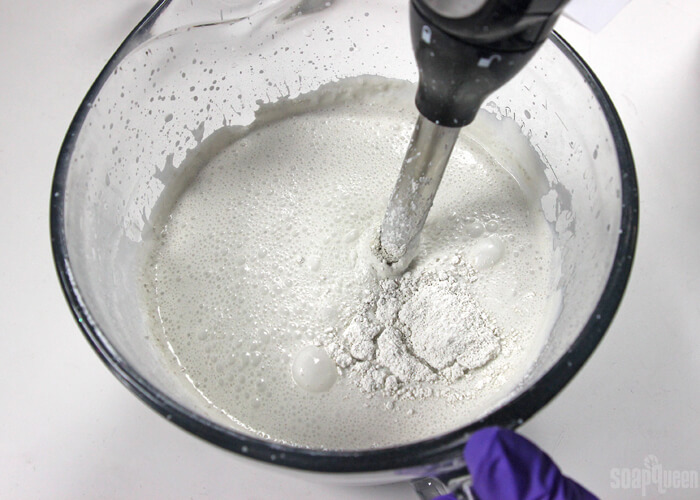
DIY Tumeric Clay Face Mask

FIVE: Continue stick blending for about one to two minutes. Use a spatula to scrape down any clay that may be on the sides of the bowl. Check the temperature of the mixture. Once the mixture is about 130-140°F, add the Optiphen, carrot seed essential oil and carrot extract. Stick blend (don’t forget to burp the stick blender!) the ingredients in until fully mixed.
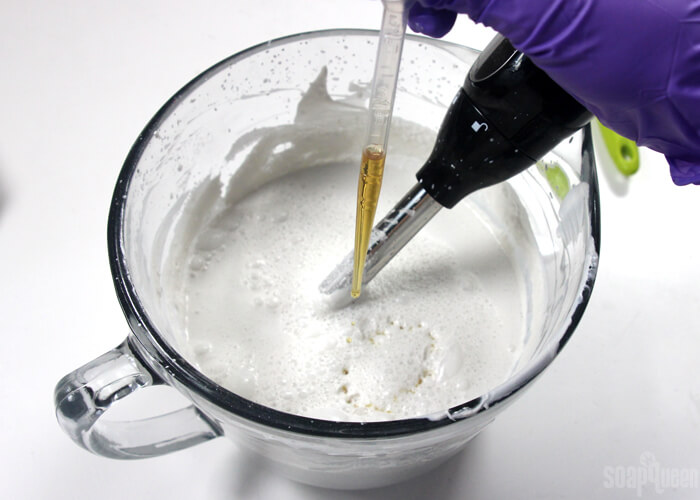
DIY Tumeric Clay Face Mask

SIX: Add the turmeric powder and stick blend until completely mixed in. Continue to stick blend for several more minutes, just to make sure the ingredients are fully emulsified.
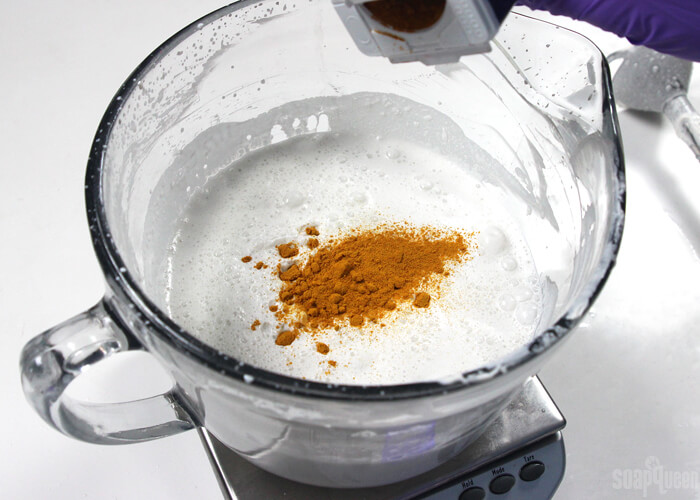
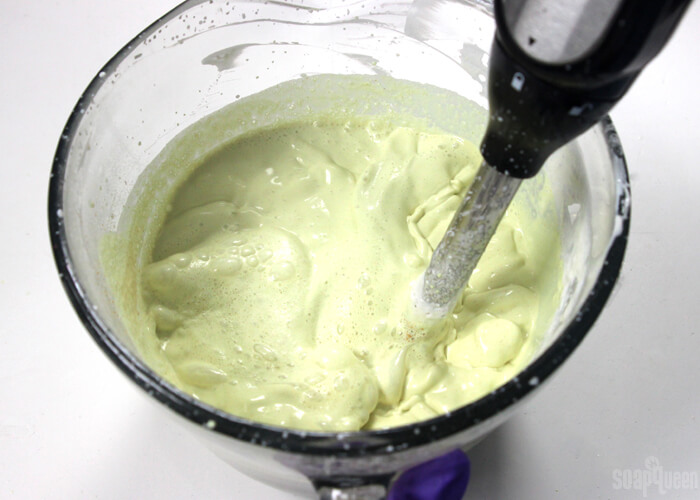
DIY Tumeric Clay Face MaskDIY Tumeric Clay Face Mask

SEVEN: Pour the mixture into the bail jars. If you find you have a lot of bubbles on the top, you can spritz the top of the containers with alcohol to help get rid of some of them. Allow the containers to cool for several hours with the lid open to avoid condensation.
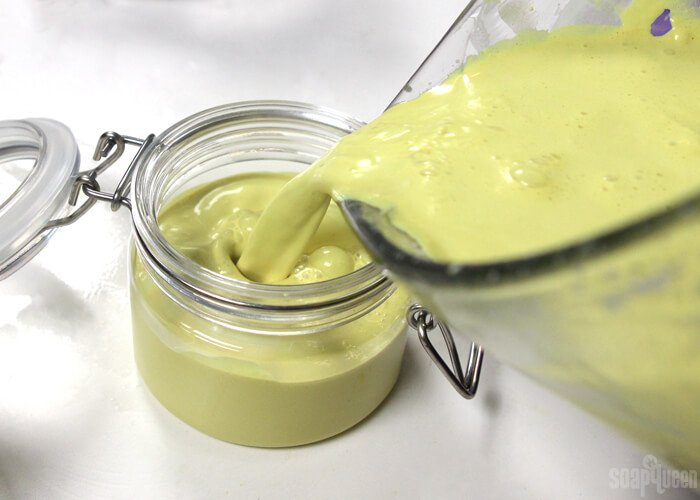
DIY Tumeric Clay Face Mask

Once fully cooled, the mixture will have become a thick, lotion-like texture. To use, apply a medium layer to dry, clean skin. Avoid the immediate eye area. Allow the mask to sit on the skin for about 10-15 minutes. Use warm water to rinse off. There is no need to wash the skin after, but you can if you prefer.
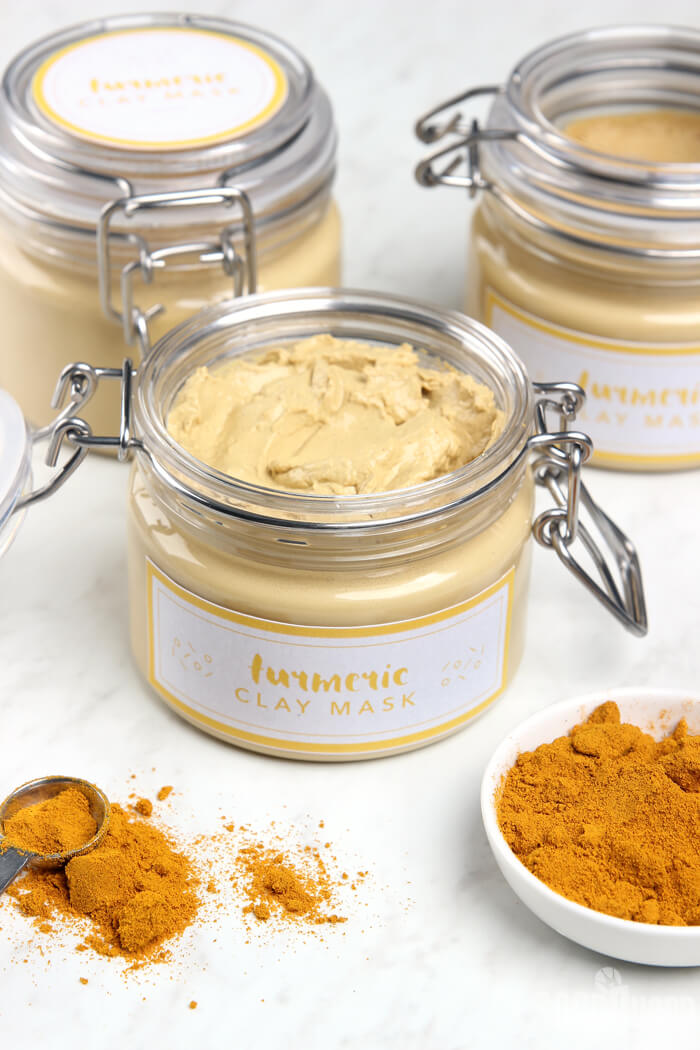
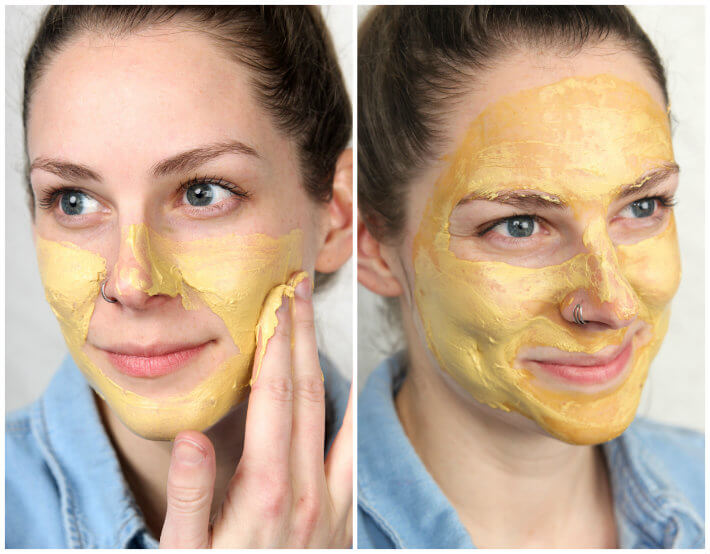
DIY Turmeric Clay Face MaskDIY Tumeric Clay Face Mask

DIY Turmeric Clay Face Mask

Soap Queen
This Turmeric Clay Mask harnesses the skin-loving properties of turmeric and is great for normal skin types.
5 from 6 votes
Prep Time 10 minutes
Cook Time 20 minutes
Total Time 30 minutes

Ingredients
  

  • Four 8 oz. Bail Jars
  • 21.4 oz. Distilled Water
  • 1 oz. Meadowfoam Oil
  • 1.3 oz. Avocado Oil
  • 1 oz. Polawax Emulsifying Wax
  • 0.8 oz. BTMS-50 Conditioning Emsulifier
  • 6 oz. Kaolin Clay
  • 0.2 oz. Turmeric Powder
  • 2 mL Carrot Seed Essential Oil
  • 0.5 oz. Carrot Extract
  • 0.2 oz. Optiphen

Instructions
 

EQUIPMENT PREP: Disinfect your utensils by dipping them in a 5% bleach water solution and allowing to dry. This includes mixing containers, your stick blender, and any spoons or spatulas that may come in contact with your mask. Your products must be as free of germs, bacteria, and microbes as possible. To be safe, bleach water all your utensils.

    CLAY PREP: In a small separate container, measure 6 ounces of kaolin clay. Have turmeric nearby.

    • In a heat-safe container, combine the avocado oil, meadowfoam oil, BTMS-50 and Polawax. Heat the container in the microwave using 30-60 second bursts until the waxes have fully melted. Be careful when removing the container, as it will be quite hot. Set aside.
    • In a separate large container, heat the distilled water in the microwave (or on the stove top) until it reaches about 160-170 ° F. Once the water reaches the correct temperature, some of it may evaporate. Remeasure and add more distilled water if necessary until you have 21.4 ounces of hot water.
    • Check the temperatures of both containers. Each container should be about 160° F. If the oil and wax has cooled, place back into the microwave until fully melted. Place the stick blender into the water, and burp it to help get rid of bubbles. Pour the oil and wax mixture into the water and use a spatula to make sure every little bit is added. Begin pulsing the stick blender. The mixture will take on a "milky" appearance once the water, oil and waxes have begun to emulsify. Continue to pulse and stir for about a minute.
    • Begin adding heaping spoonfuls of the kaolin clay and pulsing the stick blender until combined. Continue to add the clay to the mixture and blending in small amounts until all the clay is added.
    • Continue stick blending for about one to two minutes. Use a spatula to scrape down any clay that may be on the sides of the bowl. Check the temperature of the mixture. Once the mixture is about 130-140°F, add the Optiphen, carrot seed essential oil and carrot extract. Stick blend (don’t forget to burp the stick blender!) the ingredients in until fully mixed.
    • Add the turmeric powder, and stick blend until completely mixed in. Continue to stick blend for several more minutes, just to make sure the ingredients are fully emulsified.
    • Pour the mixture into the bail jars. If you find you have a lot of bubbles on the top, you can spritz the top of the containers with alcohol to help get rid of some of them. Allow the containers to cool for several hours with the lid open to avoid condensation. Once fully cooled, the mixture will have become a thick, lotion-like texture. We found that the top of the mask did form a bit of a skin.
    • To use, apply a medium layer to dry, clean skin. Avoid the immediate eye area. Allow the mask to sit on the skin for about 10-15 minutes. Use warm water to rinse off. There is no need to wash the skin after, but you can if you prefer.
    Tried this recipe?Let us know how it was!

    You may also like these

    Become an email subscriber

    Enter your email address below and you will receive all our new posts directly in your email inbox.

    1. Can I substitute carrot extract with carrot juice or water soluble carrot extract? because so difficult to find oil soluble extract in my country.
      and how much optiphen, btms 50 and polawax if I want to decrease the ingredients?
      Thank you

      1. You can use a water soluble extract or substitute the carrot juice for the water in the recipe. Keep the percentages the same if you make the recipe smaller for the Optiphen, BTMS-50 and Polawax.

      1. Sure, you will want to use the same amount and I would also recommend a small test batch to make sure it emulsifies well!

      1. All of them should work fine but because of the menthol and burning sensation I would personally stay away from Cinnamon and Peppermint!

    2. 5 stars
      I LOVE this mask! I have really sensitive skin, and the ingredients are gentle enough that I didn’t have any kind of adverse reaction — although I omitted the carrot essential oil. I ran out of my meadowfoam oil, so I replaced half of it with kukui nut oil. This mask has a great texture and it left my face feeling really smooth and hydrated. Great job on this awesome mask tutorial and thank you for the great recipe!

      1. That really comes down to personal preference and skin type. I would recommend starting at once or twice week and see how your skin feels after that.

    3. Yes because Turmeric contains more than 300 antioxidants, which makes turmeric a powerful healer. But turmeric not just heals you from inside; it also makes you more beautiful! Let’s take a look at what are the benefits of turmeric for the skin.

      1. Hi there Teona, you can find bleach at most grocery stores. To make a 5% bleach water solution, you’ll want to use 95% distilled water and 5% bleach mixed together to disinfect your tools and equipment.

    4. Hi I created this mask I did everything correct.However my mask came out really watery. I didnt use the BTMS-50 or the Polawax. I used another emulsifier the produ t is not separating just watery not creamy.

      1. The Btms-50 is a conditioning emulsifier so it helps add creaminess to the recipe as well as thickness when used with a second emulsifier.

    5. BTMS-50 is hard to find where I live, can it be substituted with BTMS-25? If yes, would I have to double the quantity of the BTMS-25?
      Thank you 🙂

      1. We haven’t worked with it before. You may want to check with the manufacturer.

    6. Just made this but accidentally added 6ml of the carrot seed essential oil, then another 3ml of ylang-ylang essential oil. Is it still safe to use? What should I do.

      1. The strongest we recommend is 6 mL, so there’s a chance your recipe may irritate the skin – especially right near the nose and eyes. I would recommend making a second batch of this mask with no essential oil, then mixing it with your current batch. That will dilute the scent so it won’t irritate the skin.

    7. 5 stars
      im trying to start my own product line all natural for the face and body for people wit acne prone skine and dark spots any tips or suggestions you have for me?

    8. Hey there, wondering how long does it take for the mask to go from green to orange?!

      Based off the pictures above the mixture looks green, then when jarred it is orange!

        1. This mask stays a light orange/yellow color. It can look a little different when it’s liquid (as pictured above) but the final pictures show the yellow color.

          1. I tried this recipe again and i am still coming up with a green mask even after cooled.

            Is .2oz turmeric the correct amount that should be added?

            1. 0.2 oz Turmeric Powder is the correct amount to use in this recipe. That is really strange. In all of our testing this recipe turned to a nice yellowish color after cooling. It could depend on the type of turmeric powder you are using.

    9. Hello Soap Queen!

      When i use this recipe and use it on the face it feels a little itchy ut doesnt irritate the skin. Why is that?
      I changed the polawax for emulsifying wax from the formula, is that the reason?

    10. Kelsey,

      Thank you for the recipe! I just love turmeric!
      I do not mix water in my recipes and just use non-heavy oils in my mask. I was wondering if I am not using water, can I avoid emulsifiers ( 1 oz. Polawax Emulsifying Wax, 0.8 oz. BTMS-50 Conditioning Emsulifier) and preservative (optiphen) and just add honey in this recipe. Will it still be effective and have good shelf life (3 months)?

      1. Yes, if your recipe is just oils you don’t need the emulsifiers – they’re just there to help mix the water in. You can also skip the preservative if you like.

        As for the honey, you may want to add that to use rather than in the mask. Because it’s water soluble it won’t mix into the oils. An emulsifier like Polysorbate 80 is needed to get it to stay together: https://www.brambleberry.com/Polysorbate-80-P4438.aspx

        Learn more about working with honey in your products here: https://soapqueen.com/bath-and-body-tutorials/tips-and-tricks/use-honey-bath-beauty-products/

    11. I’ve been looking at your other clay mask recipes and have some questions. I’m looking to make my own recipe.
      Can I add other herb powders to it? Like calendula, chamomile, or neem for example? Will it alter the recipe drastically?
      For the preservative, will vegetable glycerin suffice? And if i can’t use Optiphen since it seems to be out of stock right now, will using Germaben or Optiphen be just as good with the same measurements? I don’t entirely wanna use so much water in my recipe, but more of oils and I’m a bit lost with those ingredients and purpose of waxes and amount of preservatives.

      1. You can add other powders to this recipe. Each one will add certain properties that can change the recipe. I would recommend making a small test batch with each one. That way you can see if you like the way they feel before making a large batch.

        Glycerin is not an effective preservative and it won’t protect against mold and bacteria. You can use Phenonip or Germaben at the same amount as the Optiphen though, they will work well.

        Phenonip: https://www.brambleberry.com/Phenonip-P4038.aspx

        Germaben: https://www.brambleberry.com/Germaben-Preservative-P3972.aspx

        The preservatives are necessary because this recipe has water. Without them it can grow mold in just a few days. As for the waxes, they’re used to emulsify the oil and water. Without them the mask will separate. Learn more about making emulsified recipes like lotion here: https://soapqueen.com/bath-and-body-tutorials/lotion/how-to-create-homemade-lotion-recipes/

        And learn more about preservatives here: https://soapqueen.com/bath-and-body-tutorials/lotion/talk-it-out-tuesday-preservatives/

    12. Could you use Bentonite clay in this mask? At some point I bought a 3 lb bag of Bentonite clay by mistake and am having so much trouble finding what to do with it! Most cosmetic recipes call for a different type.

      1. Absolutely, that would feel really nice in this recipe. You may want to adjust the Optiphen in this recipe if you use aloe vera liquid, because it has a preservative in it. The preservative in the liquid and the 1% Optiphen may be a bit too much, so you can reduce the Optiphen to .5%. To find that percentage, multiply .005 by the total weight of the mask.

        Aloe vera liquid: https://www.brambleberry.com/Aloe-Vera-Liquid-P3704.aspx

        -Kelsey with Bramble Berry

        1. Hey Kelsey, I could be wrong but this recipe already used .5% Optiphen therefore it would be the same if she made 32oz…what would you suggest?

          1. Great catch. You can use the Optiphen at the same amount as already called for in this recipe since it can be used all the way up to 1.5% without irritation.

    13. 5 stars
      can we change the meadowfoam oil to another oil? what oil can replace it?

    14. Hello,

      I want to make a smaller batch of this mask, how do I reduce the recipe to about 8 oz and still keep the ingredients at the right amounts? Also instead of using the BTMS-50 Conditioning Emsulifier, can I use a Phytomulse emulsifier?

      Also have you tried adding silk to this mixture, to give it more slip?

      Thank You in advance!

      1. To resize this recipe, first find the percentages of each ingredient. You can find the percentage by dividing each ingredient by the total weight of the recipe. Once you have all the percentages, multiply each one by 8 ounces to get the smaller recipe. This post has more on that: https://soapqueen.com/bath-and-body-tutorials/tips-and-tricks/math-soapers/

        We haven’t tried Phytomulse emulsifier in this recipe, so I’m not sure how it works. I would recommend a small test batch. You can also add silk if you like. Liquid silk at 1% would be a good place to start: https://www.brambleberry.com/Liquid-Silk-P4097.aspx

        -Kelsey with Bramble Berry

    15. This recipe sounds wonderful! I have all of the ingredients and will be making this soon. I am also looking for an Activated Charcoal Mask recipe. Can I substitute the Tumeric for Activated Charcoal in this recipe?

      1. We tried these masks with activated charcoal and the charcoal didn’t mix in well. You can see the results here: https://soapqueen.com/bath-and-body-tutorials/tips-and-tricks/activated-charcoal-skin-benefits-tips-for-use/

        Because the charcoal doesn’t work with these masks, we recommend clays like kaolin or powders like turmeric. This post talks about which clays are right for your skin type: https://soapqueen.com/bath-and-body-tutorials/tips-and-tricks/which-clay-is-right-for-your-skin/

        You may also like this Cleansing Charcoal Facial Scrub: https://soapqueen.com/bath-and-body-tutorials/cleansing-charcoal-facial-scrub-diy/

        -Kelsey with Bramble Berry

        1. Hi Kelsey,

          Thank you for the response. I have been commissioned to make a mask for oily and blemish prone skin. Therefore, I will try making Sea Clay Mask and substitute one ounce of the Sea Clay for Activated Charcoal. I’ll let you know how that works.

          ~Daphna

    16. This looks so fun I really want to give it a try! I do have a couple of questions…
      Can you substitute yellow Brazilian clay for the kaolin, and would the amount need to be adjusted? Also, for the carrot extract, it states “.05 Carrot Extract” with no unit of measurement, would that be mLs or ounces? Thanks so much for this recipe!

    17. can i know the shelf life if this mask if i used the same amount of ingredients??
      and can i keep it outsaid or i have to keep it n cold place ?

        1. Hello! I know I’m late! So do I need to choose or use different preservatives for different extracts? If I was to customize the clay recipe and have water, oil and extracts.

          1. You can use Optiphen in this recipe for any extract you choose. It will work for all of them.

    18. Hello,

      I tried it twice, but when I had the clays, it all separates…makes me lose a lot of money
      I use olivewax instead of Polawax and add allantoin 2% into water before heating phase.
      I have been using this base before for lotions without problems.

      Is it because I should wait for the emulsification to cool down before adding the clays?
      Thanks

      1. We haven’t tried this recipe with olive wax, so I’m not entirely sure why your mask is separating. Is olive wax an emulsifying wax? Let me know and I can help you troubleshoot. 🙂

        -Kelsey with Bramble Berry

    19. This recipe looks fantastic! I am wondering how I would make this if I wanted to keep it as a dry mask, where the user can add their own liquid of choice before applying, just like some of your other recipes. What would you recommend changing in order to do that? Thanks!

    20. Hi, can you tell me, are there mask recipes that do not contain water? We try to avoid preservatives as much as possible.

    21. I love these recipes and can’t wait to try them! I’m wondering if goat milk can be substituted for the distilled water?

      1. We don’t recommend using goat milk in this recipe. It shortens the shelf life to about 6 weeks. After that time, it will spoil. This is the case even with a preservative. They protect against mold and bacteria but don’t extend the shelf life of the mask. Read more about using milk in lotion here: https://soapqueen.com/bath-and-body-tutorials/lotion/how-to-create-homemade-lotion-recipes/

        Distilled water works really well, and the mask feels nice and creamy because of the oils added. 🙂

        -Kelsey with Bramble Berry

      2. 5 stars
        Love the different mask recipes. What if you want the mask to stay in powder form. What would need to be added besides Kaolin Clay and Turmeric Powder?? Thank you.

      1. You can replace the BTMS-50 with more Polawax! BTMS-50 adds conditioning properties, so the mask will feel a bit different. You may want to make a small test batch to see how it feels with all Polawax. 🙂

        -Kelsey with Bramble Berry

      1. You can! Right now it has the carrot seed essential oil, which does have a distinct earthy scent. You can use a fragrance that pairs well with that earthiness (lavender 40/42 is really nice), or leave the carrot seed essential oil out and add fragrance. 🙂

        Find out how to blend essential oils safely here: https://soapqueen.com/bath-and-body-tutorials/tips-and-tricks/how-to-blend-essential-oils-safely/

        You’ll want to use the light scent recommendation on the Fragrance Calculator, as it can be pretty strong right by your nose: https://www.brambleberry.com/Pages/Fragrance-Calculator.aspx

        Find fragrances here: https://www.brambleberry.com/Fragrance-Oils-C161.aspx

        And essential oils here: https://www.brambleberry.com/Essential-Oils-C157.aspx

        -Kelsey with Bramble Berry

    22. If you make these face masks for resale, do they have to be sent for testing like lotion does? I love your site and tutorials. Thanks.

      1. She liked this one best! She said, “I couldn’t believe how soft my face felt afterwards, and I definitely noticed less redness!” 🙂

        -Kelsey with Bramble Berry

    Comments are closed.

    {"email":"Email address invalid","url":"Website address invalid","required":"Required field missing"}

    The Latest from Soap Queen TV

    Inspired by Gems & Crystals

    All About Essential Oils

    The Power of Charcoal

    Create Your Own Clay Face Mask

    DIY Bath Bombs

    Cold Process Soap Tips & Tricks

    Learn the Basics of Cold Process Soapmaking

    Learn the Basics of Melt & Pour Soapmaking

    Want to Start Your Own Soap Business?

    Soap Business Success Stories

    Soap Queen TV Favorites

    Ingredient Spotlight

    Disclosure

    Unless stated otherwise, all images are original material and are copyrighted. If you'd like to use an image, please be a friend and credit the photo and link back to Soap Queen. Feel free to share, tweet and pin to your hearts content.