





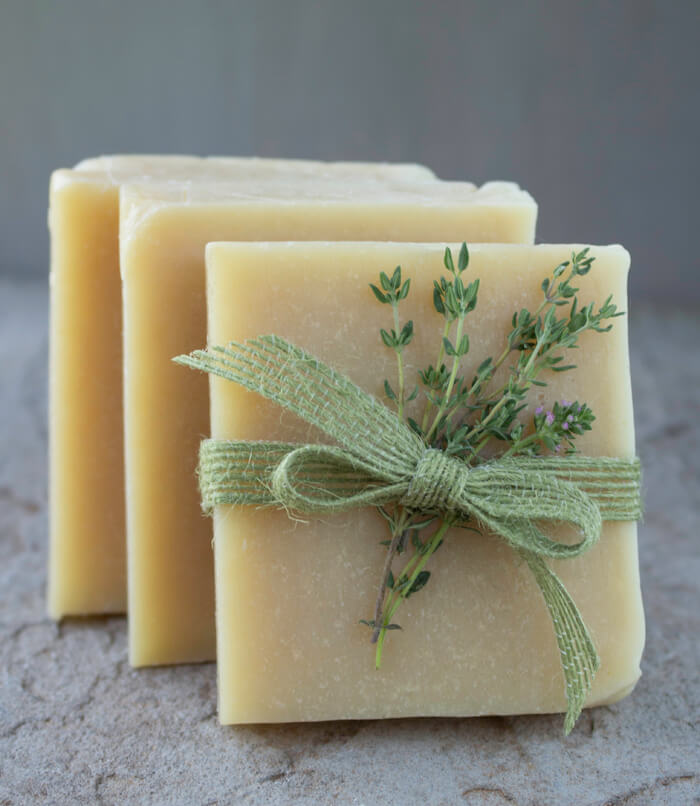
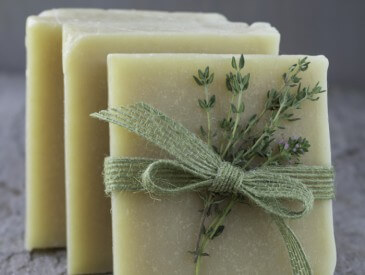
 Thyme & Witch Hazel Facial Bars. Photo by Jan Berry.
Today, Jan Berry of The Nerdy Farm Wife was kind enough to share this recipe for Thyme & Witch Hazel Facial Bars from her new book, 101 Easy Homemade Products for your Skin, Health and Home. The book is full of unique and simple recipes for cold process soap, scrubs, lotions, balms and more. Jan is also the author of several eBooks, including Natural Soap Making, Things To Do With Roses and Things To Make With Mint.
For this recipe, the distilled water is infused with fresh thyme. Then, witch hazel is combined with honey and added to the soap at trace. The large amount of olive oil and sunflower oil creates a gentle bar, making it great for delicate facial skin. Castor oil boosts lather and tamanu oil is added for its anti-inflammatory properties. To learn more about tamanu oil, click here. Because of the small amount of hard oils, so you may find this recipe takes a little bit longer to reach trace.
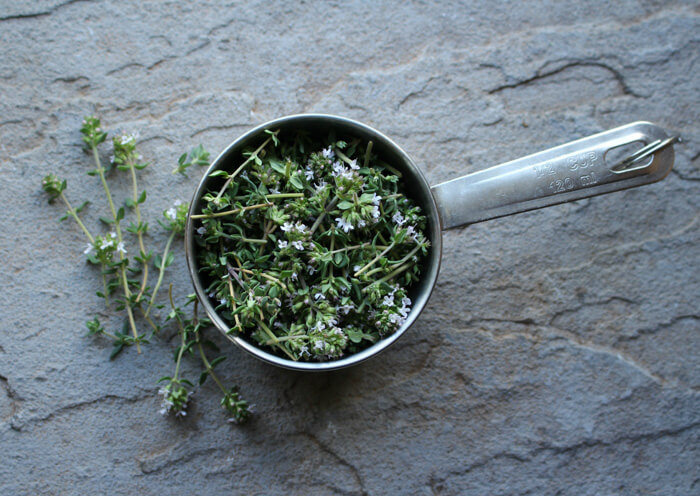 The water in this recipe is infused with fresh thyme. Photo by Jan Berry.
I was intrigued by the idea of adding witch hazel at trace, as I previously avoided adding witch hazel to cold process soap. My thought was the alcohol content in the witch hazel would react poorly. Once, I accidentally sprayed witch hazel on top of my soap rather than 99% isopropyl alcohol and it caused some separation. When I tested Jan’s recipe, I found the witch hazel behaved wonderfully with no problems at all. Even after 20+ years of soaping, I’m still learning new things. =)
Jan reports that adding witch hazel to soap at trace can lead to a slightly medicinal smell while the soap cures. When I made this recipe, I found the curing bars had a slightly sweet/medicinal smell that I really enjoyed. After about two weeks of curing, this scent faded.
What You’ll Need:
Thyme Infused-Water
1/2 cup Chopped Fresh or 1/4 cup Dried Thyme
8 oz. Simmering Hot Distilled Water
The Soap
10″ Silicone Loaf Mold
15 oz. Olive Oil
8 oz. Coconut Oil
4 oz. Sunflower Oil
2 oz. Castor Oil
1 oz. Tamanu Oil
4.17 oz. Sodium Hydroxide Lye
0.5 oz. Raw Honey
1 oz. Witch Hazel

Click here to add everything you need for this project to your Bramble Berry shopping cart!
[sq_products]
If you’ve never made Cold Process soap before, stop here! I highly recommend checking out our FREE four part SoapQueen.tv series on Cold Process Soapmaking, especially the episode on lye safety. And if you’d rather do some reading, Bramble Berry carries a wide range of books on the topic, including my newest book, Pure Soapmaking. You can also check out the digital downloads for that instant gratification factor.
SAFETY FIRST: Suit up for safe handling practices! That means goggles, gloves and long sleeves. Make sure kids, pets, and other distractions and tripping hazards are out of the house or don’t have access to your soaping space. Always soap in a well-ventilated area.
THYME-INFUSED WATER: Place the thyme in a heatproof jar or pitcher. Pour the simmering hot distilled water into the jar and let steep for up to 1 hour, or until cool. Strain and set aside. If you’re using dried thyme, you may only need to steep it for 30 minutes, otherwise the water may turn darker and discolor the soap. Dried thyme is stronger than fresh thyme.
HONEY & WITCH HAZEL MIXTURE: In a small bowl, blend the honey and witch hazel together in a small bowl and set aside. This will be added to the soap later at trace.
ONE: Once the thyme tea is completely cooled, slowly and carefully add the lye to the thyme water and gently stir until the lye has fully dissolved and the liquid is clear. Set aside to cool. The water may turn a different color as the lye is added.
TWO: Melt and combine the olive, coconut, sunflower, castor and tamanu oils. Once the lye water and the oils have cooled to 110-120° F degrees or below (and are ideally within 10 degrees of each other), add the lye water to the oils and begin stick blending. If you’d like a harder bar of soap that releases faster from the mold, you can add sodium lactate to the cooled lye water. Use 1 teaspoon of sodium lactate per pound of oils in the recipe. For this recipe, you’d add about 2 teaspoons sodium lactate.
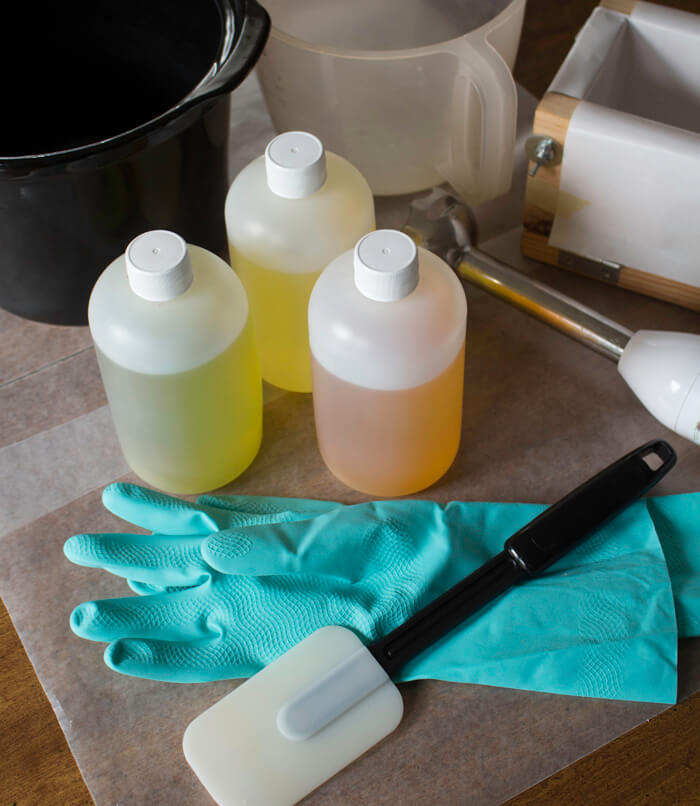 Photo by Jan Berry.
THREE: Continue stick blending the mixture until you reach a thin to medium trace. Because this recipe contains a high amount of liquid oils, this may take several minutes. Thoroughly stick blend the honey and witch hazel mixture into the soap. Pour the batter into the mold, and tap on the counter to help get rid of bubbles.
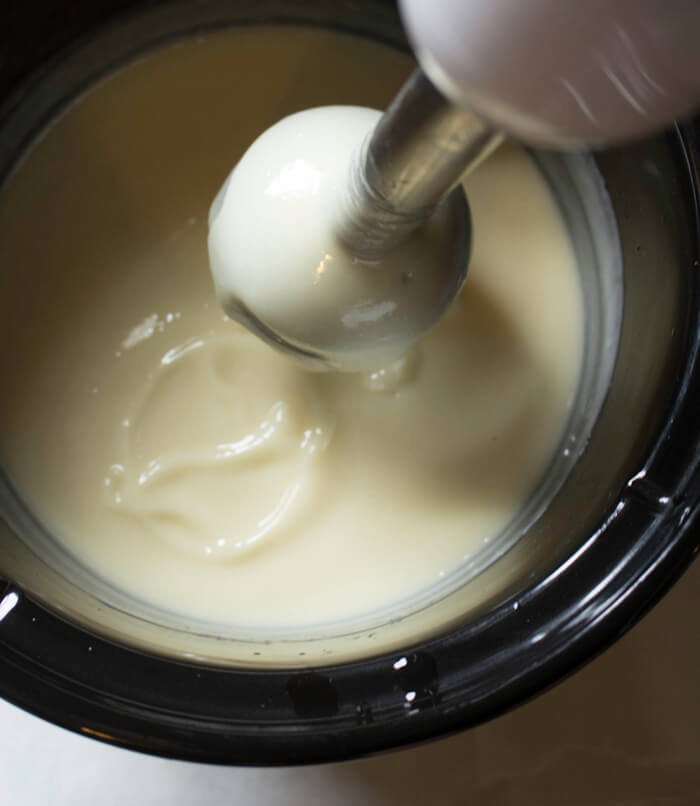 Photo by Jan Berry.
FOUR: Honey tends to make soap heat up more than normal, so you do not need to insulate the soap. You can also pop it in the fridge or freezer for 5-24 hours to keep the soap from overheating. Read more about working with honey in soap here. Spritz with 99% isopropyl alcohol to help prevent soda ash. Allow the soap to stay in the mold for 2-3 days. Because this is a softer recipe, it may need more time in the mold than normal. Remove from the mold and slice into bars. Allow the bars to cure for 4-6 weeks and enjoy!
A big thanks to Jan for sharing her recipe. Have you ever tried using witch hazel in soap before? I would love to hear about your experience with it!
Guest Post: Thyme & Witch Hazel Facial Bar DIY
Ingredients
Thyme Infused-Water
- 1/2 cup Chopped Fresh or 1/4 cup Dried Thyme
- 8 oz. Simmering Hot Distilled Water
The Soap
- 10 ″ Silicone Loaf Mold
- 15 oz. Olive Oil
- 8 oz. Coconut Oil
- 4 oz. Sunflower Oil
- 2 oz. Castor Oil
- 1 oz. Tamanu Oil
- 4.17 oz. Sodium Hydroxide Lye
- 0.5 oz. Raw Honey
- 1 oz. Witch Hazel
Instructions
- SAFETY FIRST: Suit up for safe handling practices! That means goggles, gloves and long sleeves. Make sure kids, pets, and other distractions and tripping hazards are out of the house or don’t have access to your soaping space. Always soap in a well-ventilated area.
- THYME-INFUSED WATER: Place the thyme in a heatproof jar or pitcher. Pour the simmering hot distilled water into the jar and let steep for up to 1 hour, or until cool. Strain and set aside. If you're using dried thyme, you may only need to steep it for 30 minutes, otherwise the water may turn darker and discolor the soap. Dried thyme is stronger than fresh thyme.
- HONEY & WITCH HAZEL MIXTURE: In a small bowl, blend the honey and witch hazel together in a small bowl and set aside. This will be added to the soap later at trace.
- Once the thyme tea is completely cooled, slowly and carefully add the lye to the thyme water and gently stir until the lye has fully dissolved and the liquid is clear. Set aside to cool. The water may turn a different color as the lye is added.
- Melt and combine the olive, coconut, sunflower, castor and tamanu oils. Once the lye water and the oils have cooled to 110-120 F degrees or below (and are ideally within 10 degrees of each other), add the lye water to the oils and begin stick blending. If you’d like a harder bar of soap that releases faster from the mold, you can add sodium lactate to the cooled lye water. Use 1 teaspoon of sodium lactate per pound of oils in the recipe. For this recipe, you’d add about 2 teaspoons sodium lactate.
- Continue stick blending the mixture until you reach a thin to medium trace. Because this recipe contains a high amount of liquid oils, this may take several minutes. Thoroughly stir in the honey and witch hazel mixture into the soap. Pour the batter into the mold, and tap on the counter to help get rid of bubbles.
- Honey tends to make soap heat up more than normal, so you do not need to insulate the soap. You can also pop it in the fridge or freezer for 5-24 hours to keep the soap from overheating. Spritz with 99% isopropyl alcohol to help prevent soda ash. Allow the soap to stay in the mold for 2-3 days. Because this is a softer recipe, it may need more time in the mold than normal. Remove from the mold and slice into bars. Allow the bars to cure for 4-6 weeks and enjoy!
