




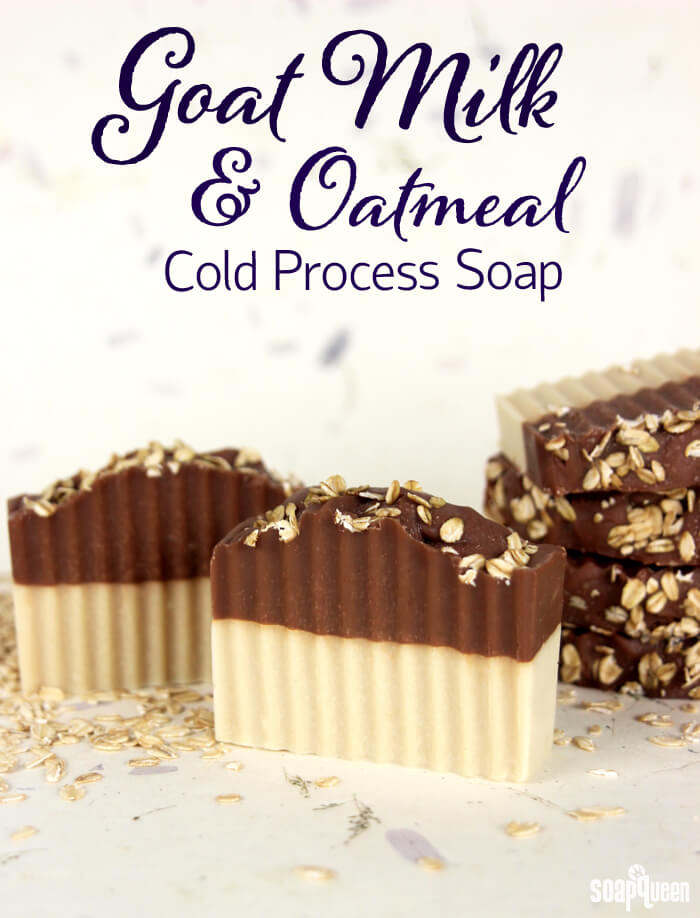
Goat milk may be the most popular type of milk when it comes to soap making. Moisturizing and nourishing, goat milk contains lactic acid which helps keep skin smooth by naturally exfoliating skin. Goat milk also contains vitamins A, D and B6. Many soap makers find fresh goat milk via local farms and markets, or raise their own goats. When fresh goat milk is unavailable, goat milk powder is a fantastic option. Simply add the goat milk to distilled water to reconstitute and receive all the skin loving benefits. For more information on working with milk in soap, check out this How to Add Lye to Milk post, and the Buttermilk Bastille Baby Bar video on Soap Queen TV.
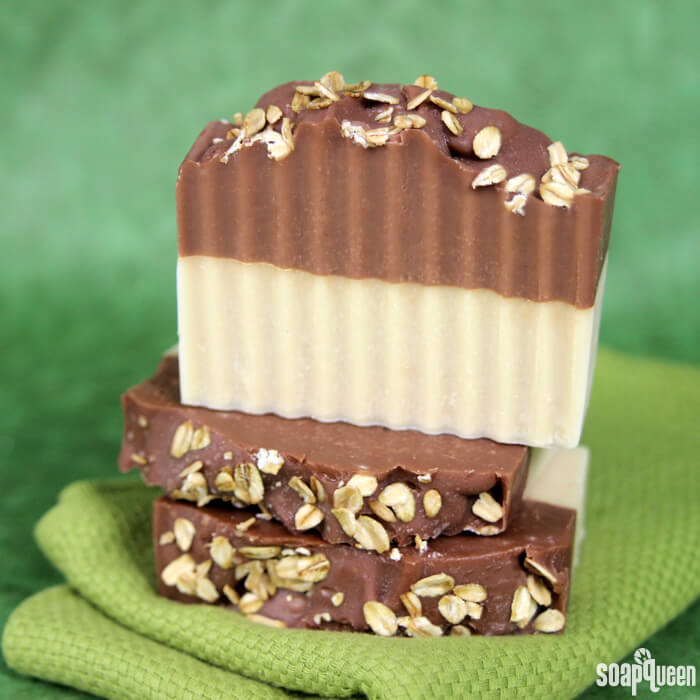
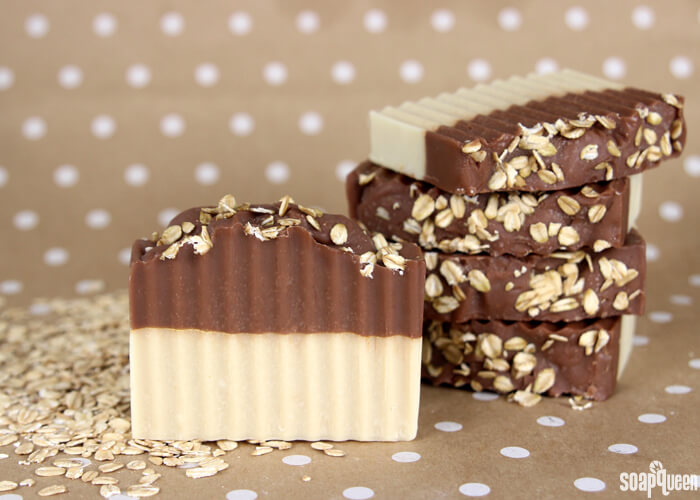
This Goat Milk and Oatmeal Cold Process soap is made with powdered goat milk, oat extract and colloidal oatmeal for a bar that is gentle on the skin. Colloidal oatmeal is extremely fine ground oatmeal that is fantastic for irritated or sensitive skin. Oatmeal, Milk and Honey Fragrance Oil gives this bar a warm and comforting scent. The fragrance also lends its vanilla discoloration to the top layer, which darkens the Brown Oxide used to color it. For more information on fragrance discoloration, click through the Why Did My Soap Turn Brown post.
What You’ll Need:
10″ Silicone Loaf Mold
3.5 oz. Sweet Almond Oil
1.7 oz. Castor Oil
10.5 oz. Coconut Oil
10.5 oz. Olive Oil
8.8 oz. Palm Oil
5 oz. Sodium Hydroxide Lye
11.5 oz. Distilled Water
2 oz. Oatmeal, Milk and Honey Fragrance Oil
1 Tbs. Oat Extract
Titanium Dioxide
Brown Oxide
Gold Sparkle Mica
Colloidal Oatmeal
Powdered Goat Milk
Oatmeal (for top)
Optional: Crinkle Cutter

SAFETY FIRST: Suit up for safe handling practices! That means goggles, gloves and long sleeves. Make sure kids, pets, and other distractions and tripping hazards are out of the house or don’t have access to your soaping space. Always soap in a well-ventilated area.
MILK PREP: Mix 1.5 oz. of goat milk powder into the distilled water. Once the powder is completely mixed into the water and contains no clumps, pour the milk into ice cube trays and place them into the freezer until completely hard (several hours to overnight).
COLOR PREP: To ensure that the Titanium Dioxide blends smoothly into the soap batter, we recommend micronizing it before dispersing it in oil. Please note this is an optional tip but it does help with the titanium dioxide clumping in the soap =) To micronize colorant, simply use a coffee grinder to blend the colorant to break up any clumps of color and prevent streaks of white from showing in the final soap. We like to use a coffee grinder that has a removable, stainless steel mixing area for easy cleaning. Then, disperse 1 teaspoons of the colorant into 1 tablespoon of sunflower or sweet almond oil (or any other liquid oil). Disperse 1 teaspoons of the brown oxide into 1 tablespoon light liquid oil. Then, disperse 1 teaspoon colloidal oatmeal into 1 tablespoon light liquid oil. Use a mini mixer to get the clumps of color worked out smoothly.
ONE: Remove the fully frozen milk from the ice cube trays and place into a container that has been placed in an ice bath. Slowly add lye and stir until the lye is fully dissolved and the milk has become liquid. Click here to see this process and more tips on creating a lye and milk mixture. The more slowly you add the lye, the cooler the temperature of this mixture will stay. This process will take at least 10 minutes. Make sure there are no undissolved lye bits. The lack of heat slows the process considerably. If you’d like a harder bar of soap that releases faster from the mold, you can add sodium lactate to the cooled lye milk. Use 1 teaspoon of sodium lactate per pound of oils in the recipe. For this recipe, you’d add about 2.5 tsp. sodium lactate.
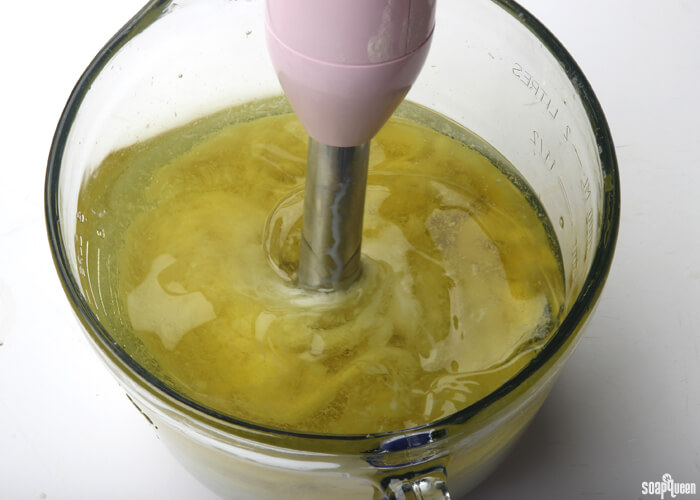
TWO: Melt and combine the coconut oil, olive oil, castor, sweet almond oil and palm oils (remember to fully melt then mix your entire container of palm oil before portioning). Once the oils have cooled to 130 degrees or below, add the lye milk to the oils and stick blend until medium trace. Because this design is simple, a thicker trace than normal works great.
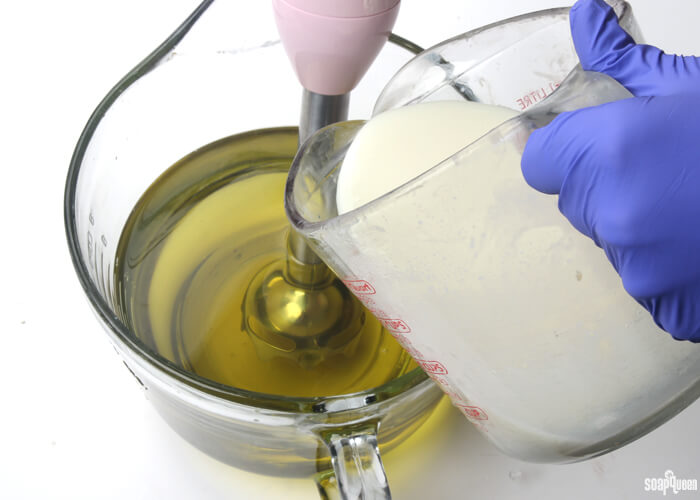
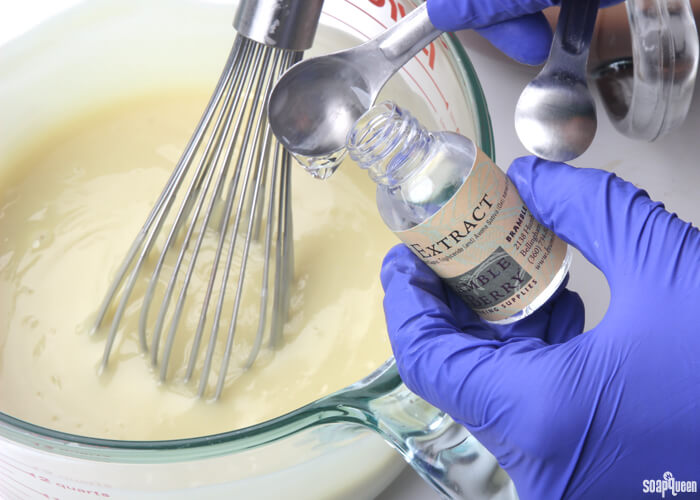
 THREE: Add 1 tablespoon of oat extract, and use a whisk to combine.
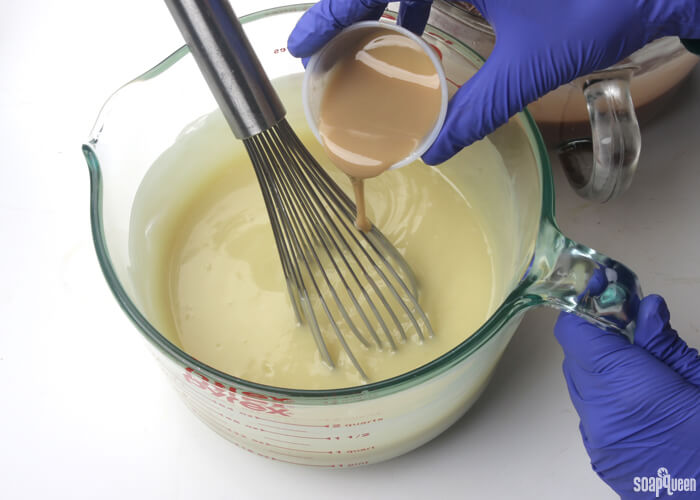
 FOUR: Split the batch evenly into two containers. Each container will hold about 3 cups. To one container, add all of the colloidal oatmeal and titanium dioxide. Use a whisk to fully blend in.
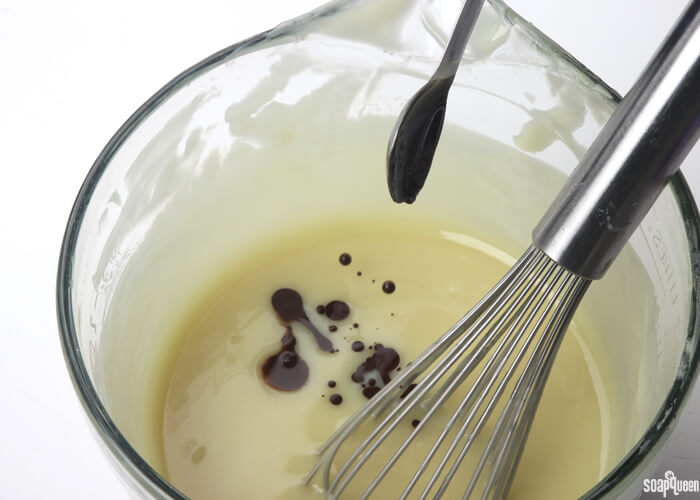
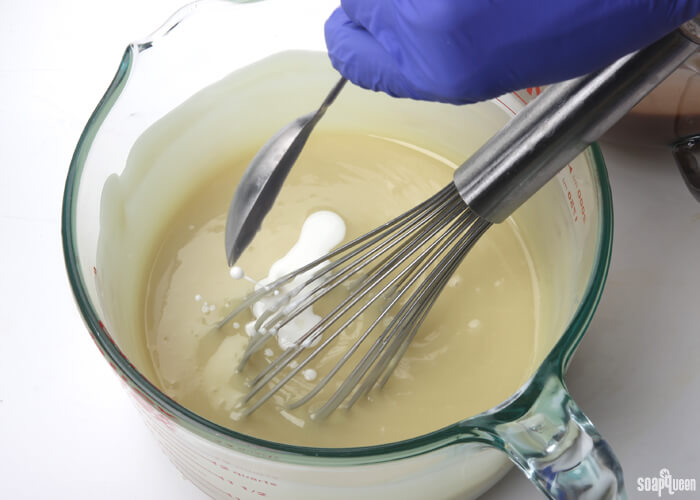 FIVE: To the other container, add 2 teaspoons dispersed brown oxide and all of the Oatmeal, Milk and Honey Fragrance Oil. Use a whisk to fully mix in.
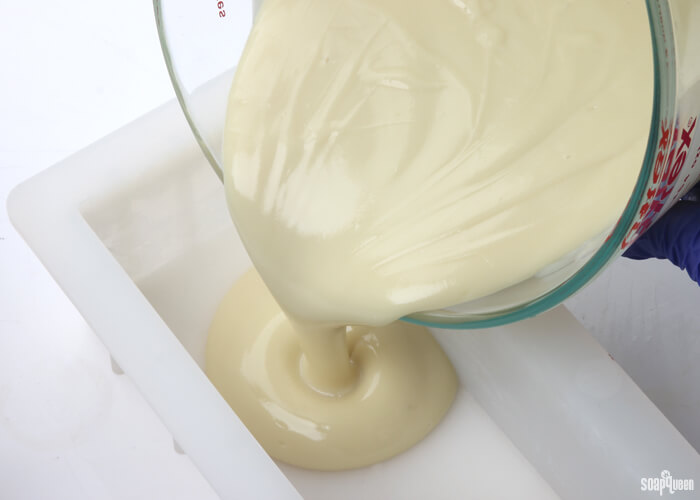
 SIX: Pour the white soap into the mold, and firmly tap the mold onto the counter to evenly disperse the soap and get rid of air bubbles.
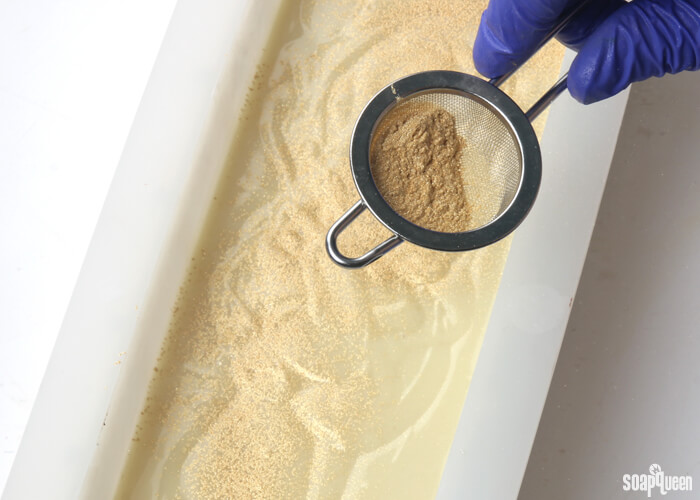
 SEVEN: Use a powder duster to sprinkle on a thin layer of Gold Sparkle Mica. Don’t use too much, or the layers of soap may separate. Once the mica has been sprinkled on, close your eyes and gently blow on the mica to evenly disperse it.
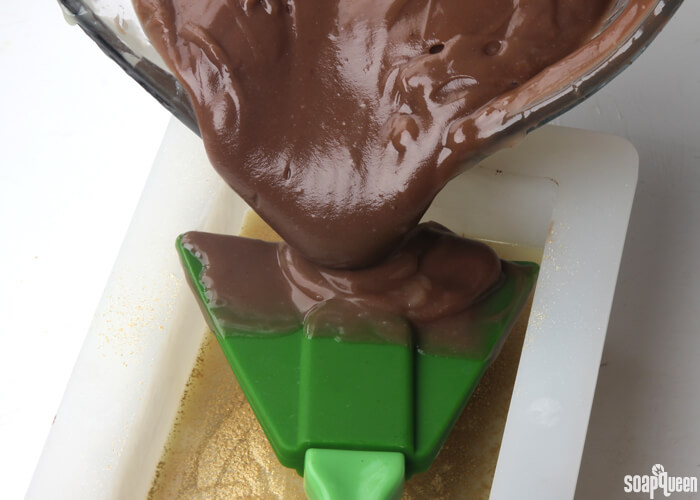
 EIGHT: Slowly and carefully, pour the brown soap into the mold. Pour the soap over a spoon or spatula to make sure the soap does not break through to the white layer.
 NINE: Gently tap the mold onto the counter to evenly disperse the soap in the mold. This also helps get rid of air bubbles.
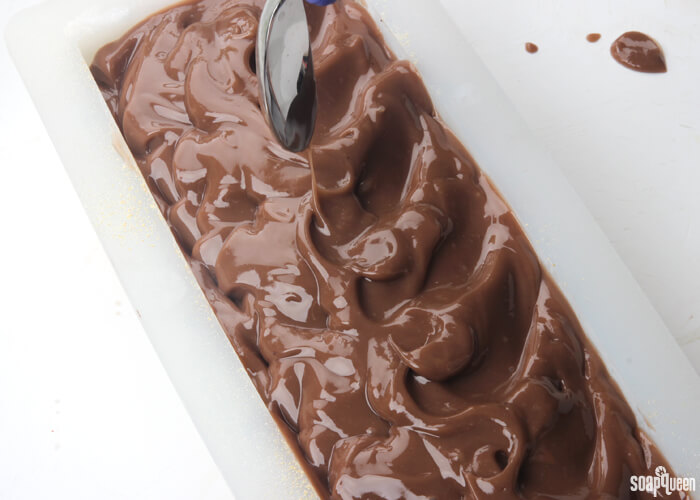
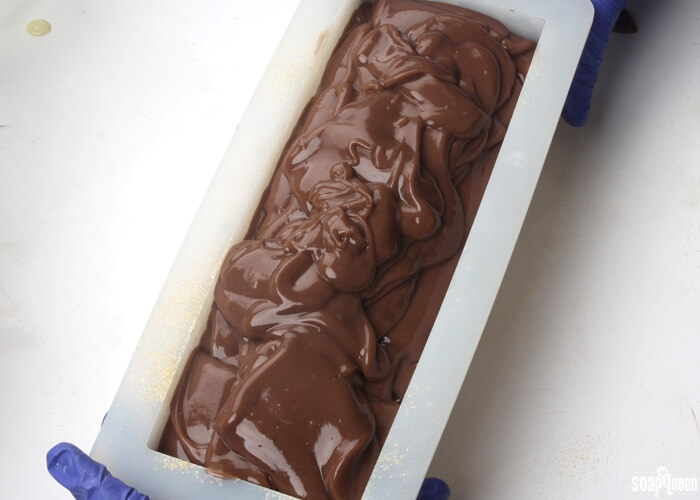 TEN: Use a spoon to create peaks and texture into the top of the soap.
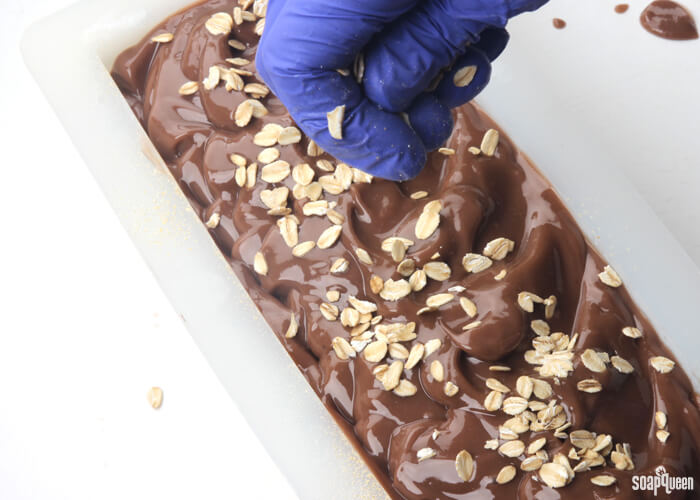
 ELEVEN: Sprinkle a layer of oatmeal on the top. Once you’re happy with the amount of oatmeal, spray the top with 99% isopropyl alcohol. Place the soap in the freezer for 5-24 hours to help prevent gel phase. Remove the soap from the freezer and allow to sit in the mold for 4-5 days. Milk soap can be a little softer due to the extra milk fat. Patience is key! Use the crinkle cutter to create a textured bar, or a sharp non-serrated knife for a smooth cut. Make sure there are no pieces of oatmeal directly under the knife, otherwise it may create drag marks. You can also turn the soap on its side to cut it in order to prevent drag marks.
Have you used goat milk in cold process soap before? Be on the lookout for more milk tutorials coming soon!

Goat Milk & Oatmeal Cold Process Soap Tutorial
Ingredients
- 10 ″ Silicone Loaf Mold
- 3.5 oz. Sweet Almond Oil
- 1.7 oz. Castor Oil
- 10.5 oz. Coconut Oil
- 10.5 oz. Olive Oil
- 8.8 oz. Palm Oil
- 5 oz. Sodium Hydroxide Lye
- 11.5 oz. Distilled Water
- 2 oz. Oatmeal Milk and Honey Fragrance Oil
- 1 Tbs. Oat Extract
- Titanium Dioxide
- Brown Oxide
- Gold Sparkle Mica
- Colloidal Oatmeal
- Oatmeal for top
- Optional: Crinkle Cutter
Instructions
MILK PREP: Mix 1.5 oz. of goat milk powder into the distilled water. Once the powder is completely mixed into the water and contains no clumps, pour the milk into ice cube trays and place them into the freezer until completely hard (several hours to overnight).
COLOR PREP: To ensure that the Titanium Dioxide blends smoothly into the soap batter, we recommend micronizing it before dispersing it in oil. Please note this is an optional tip but it does help with the titanium dioxide clumping in the soap =) To micronize colorant, simply use a coffee grinder to blend the colorant to break up any clumps of color and prevent streaks of white from showing in the final soap. We like to use a coffee grinder that has a removable, stainless steel mixing area for easy cleaning. Then, disperse 1 teaspoons of the colorant into 1 tablespoon of sunflower or sweet almond oil (or any other liquid oil). Disperse 1 teaspoons of the brown oxide into 1 tablespoon light liquid oil. Then, disperse 1 teaspoon colloidal oatmeal into 1 tablespoon light liquid oil. Use a mini mixer to get the clumps of color worked out smoothly.
- Remove the fully frozen milk from the ice cube trays and place into a container that has been placed in an ice bath. Slowly add lye and stir until the lye is fully dissolved and the milk has become liquid. Click here to see this process and more tips on creating a lye and milk mixture. If you’d like a harder bar of soap that releases faster from the mold, you can add sodium lactate to the cooled lye milk. Use 1 teaspoon of sodium lactate per pound of oils in the recipe. For this recipe, you’d add about 2.5 tsp. sodium lactate.
- Melt and combine the coconut oil, olive oil, castor, sweet almond oil and palm oils (remember to fully melt then mix your entire container of palm oil before portioning). Once the oils have cooled to 130 degrees or below, add the lye milk to the oils and stick blend until medium trace. Because this design is simple, a thicker trace than normal works great.
- Add 1 tablespoon of oat extract, and use a whisk to combine.
- Split the batch evenly into two containers. Each container will hold about 3 cups. To one container, add all of the colloidal oatmeal and titanium dioxide. Use a whisk to fully blend in.
- To the other container, add 2 teaspoons dispersed brown oxide and all of the Oatmeal, Milk and Honey Fragrance Oil. Use a whisk to fully mix in.
- Pour the white soap into the mold, and firmly tap the mold onto the counter to evenly disperse the soap and get rid of air bubbles.
- Use a powder duster to sprinkle on a thin layer of Gold Sparkle Mica. Don’t use too much, or the layers of soap may separate. Once the mica has been sprinkled on, close your eyes and gently blow on the mica to evenly disperse it.
- Slowly and carefully, pour the brown soap into the mold. Pour the soap over a spoon or spatula to make sure the soap does not break through to the white layer.
- Gently tap the mold onto the counter to evenly disperse the soap in the mold. This also helps get rid of air bubbles.
- Use a spoon to create peaks and texture into the top of the soap.
- Sprinkle a layer of oatmeal on the top. Once you’re happy with the amount of oatmeal, spray the top with 99% isopropyl alcohol. Place the soap in the freezer for 5-24 hours to help prevent gel phase. Remove the soap from the freezer and allow to sit in the mold for 4-5 days. Milk soap can be a little softer due to the extra milk fat. Patience is key! Use the crinkle cutter to create a textured bar, or a sharp non-serrated for a smooth cut.
